CJ-06Edition 1.1 · November 2026
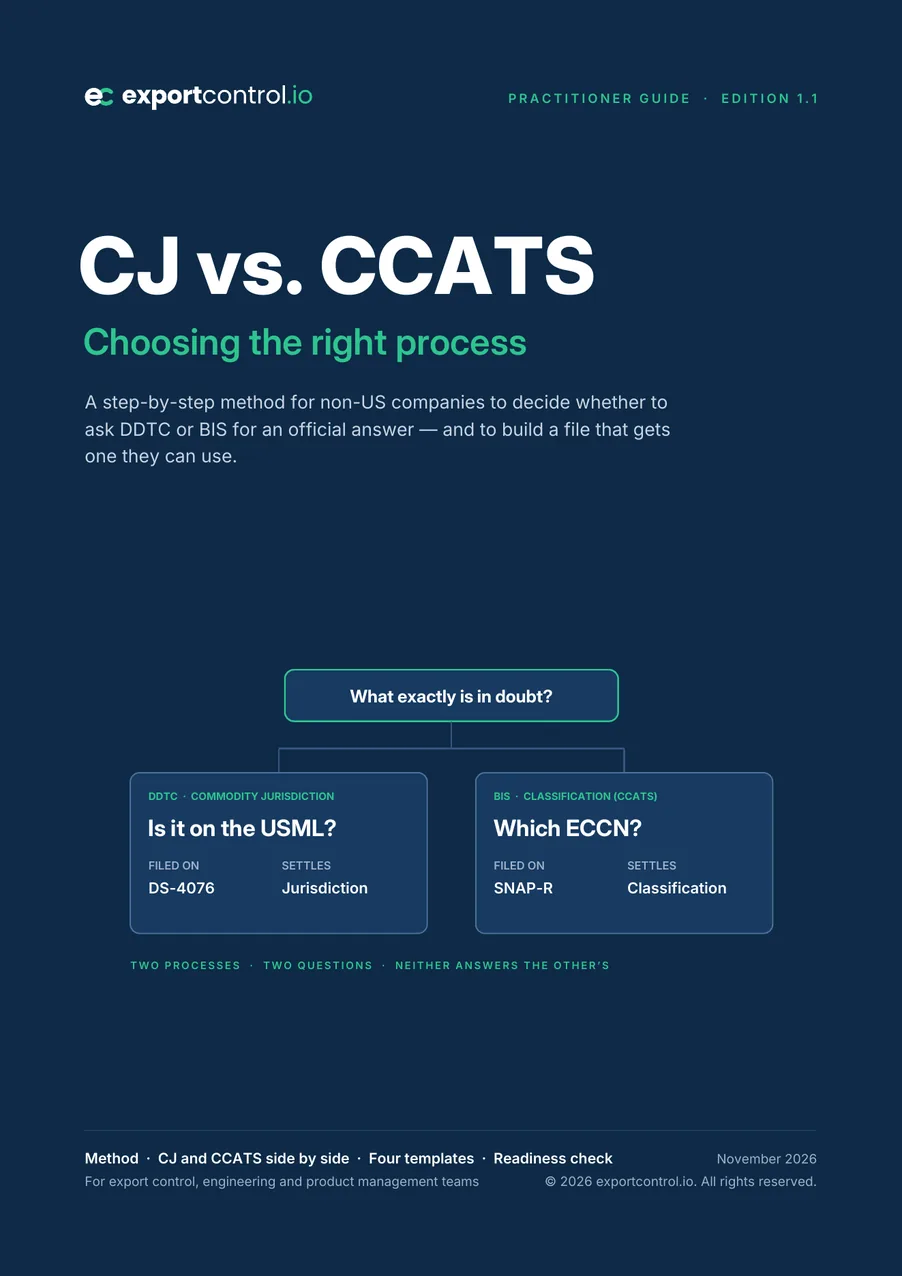
CJ vs. CCATS
Choosing the right process
A step-by-step method for non-US companies to decide whether to ask DDTC or BIS for an official answer — and to build a file that gets one they can use.
What this guide settles
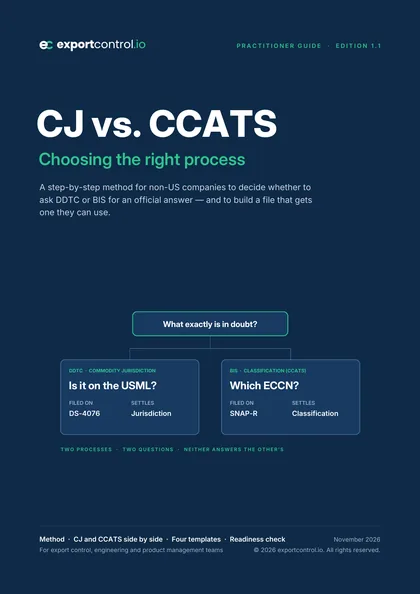
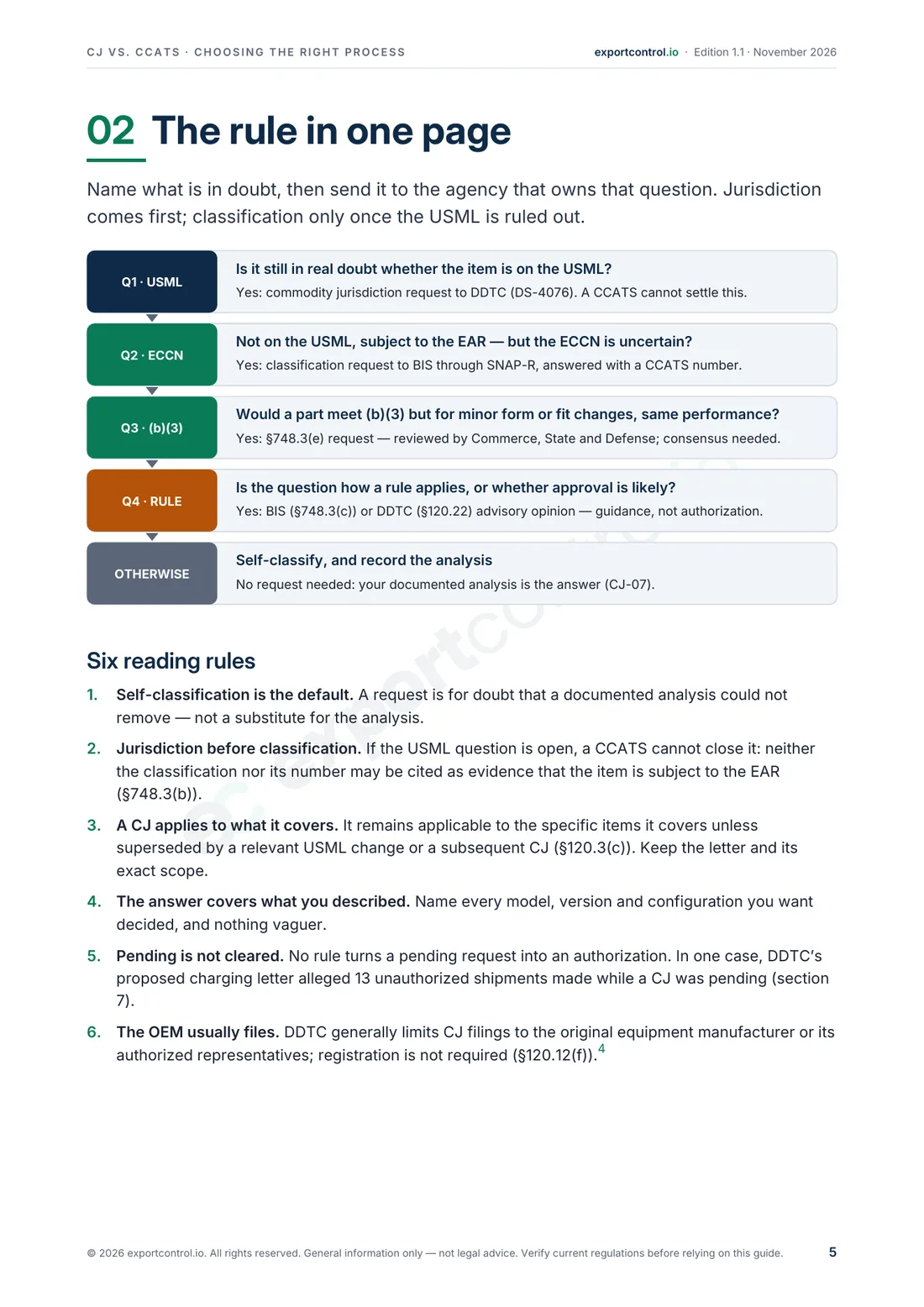
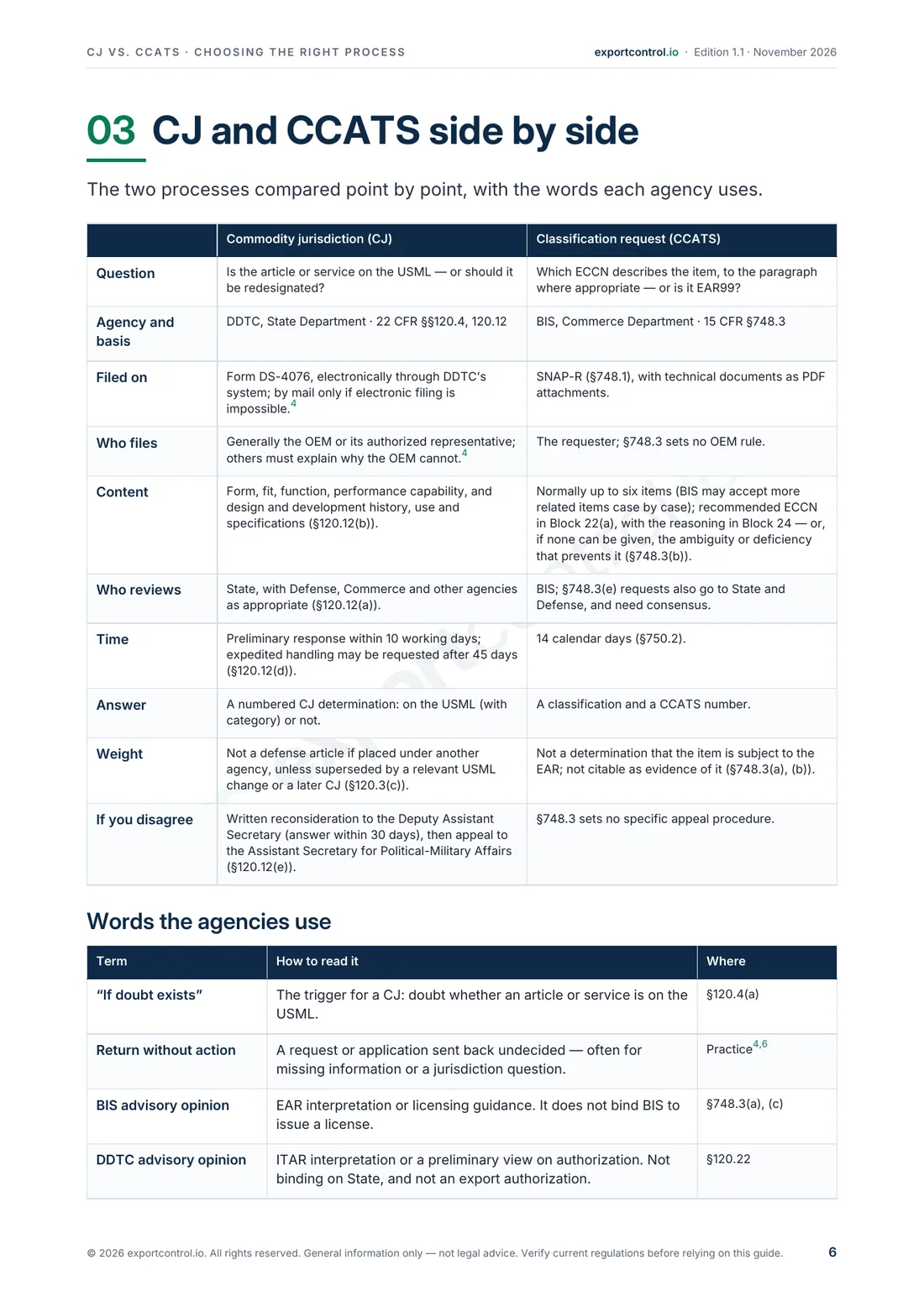
- A CJ answers “is it on the USML?”; a CCATS answers “which ECCN?”. Neither answers the other’s question
- A BIS classification and its CCATS number cannot be cited as evidence that an item is subject to the EAR
- Self-classification is the default; file when real doubt remains after a documented analysis
- Pending is not cleared: decide interim handling the day you file
What you get
- The guide: explanations, method, conditions and limits
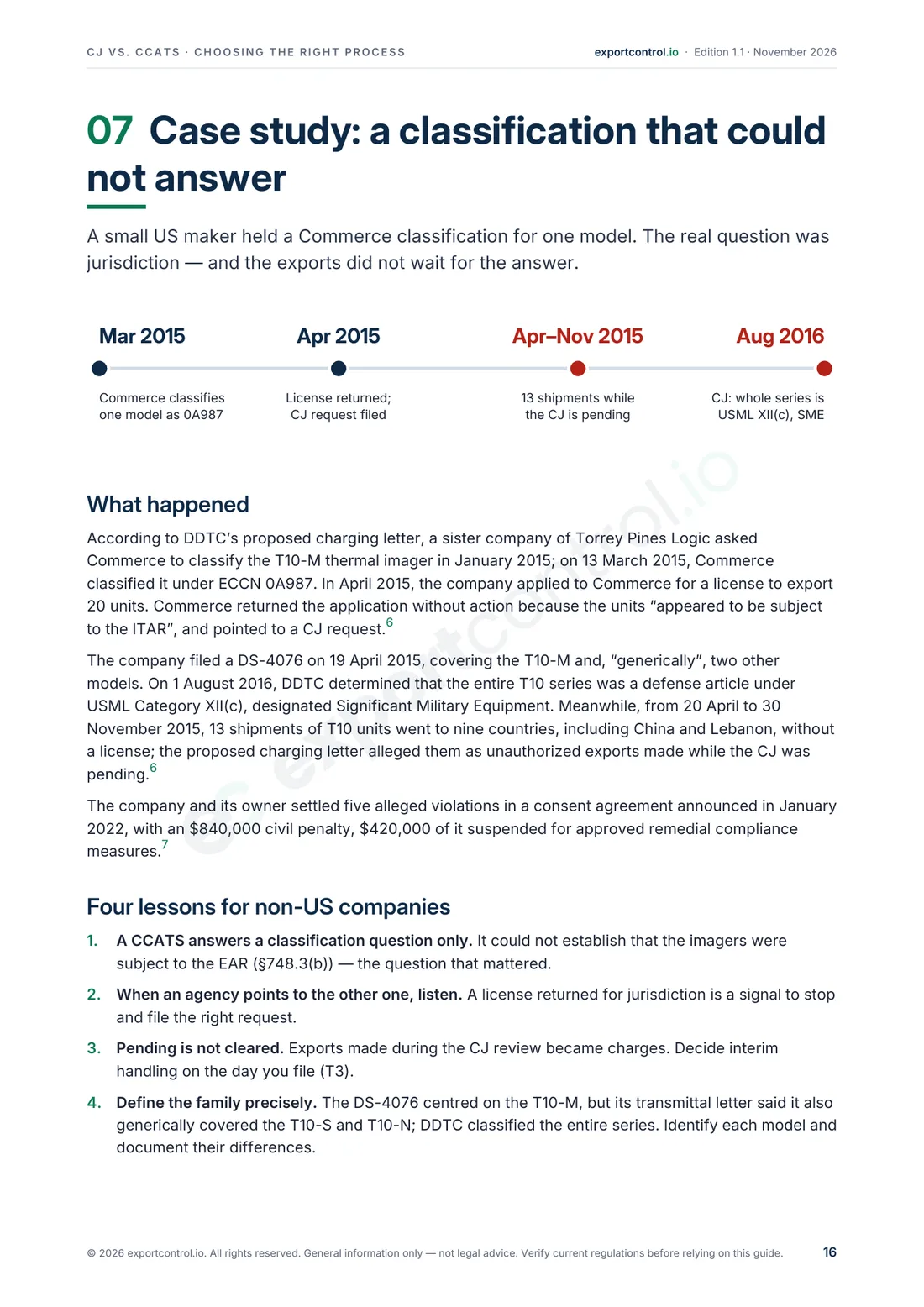
- Worked examples: five official routes compared, a commented real case and ten pitfalls
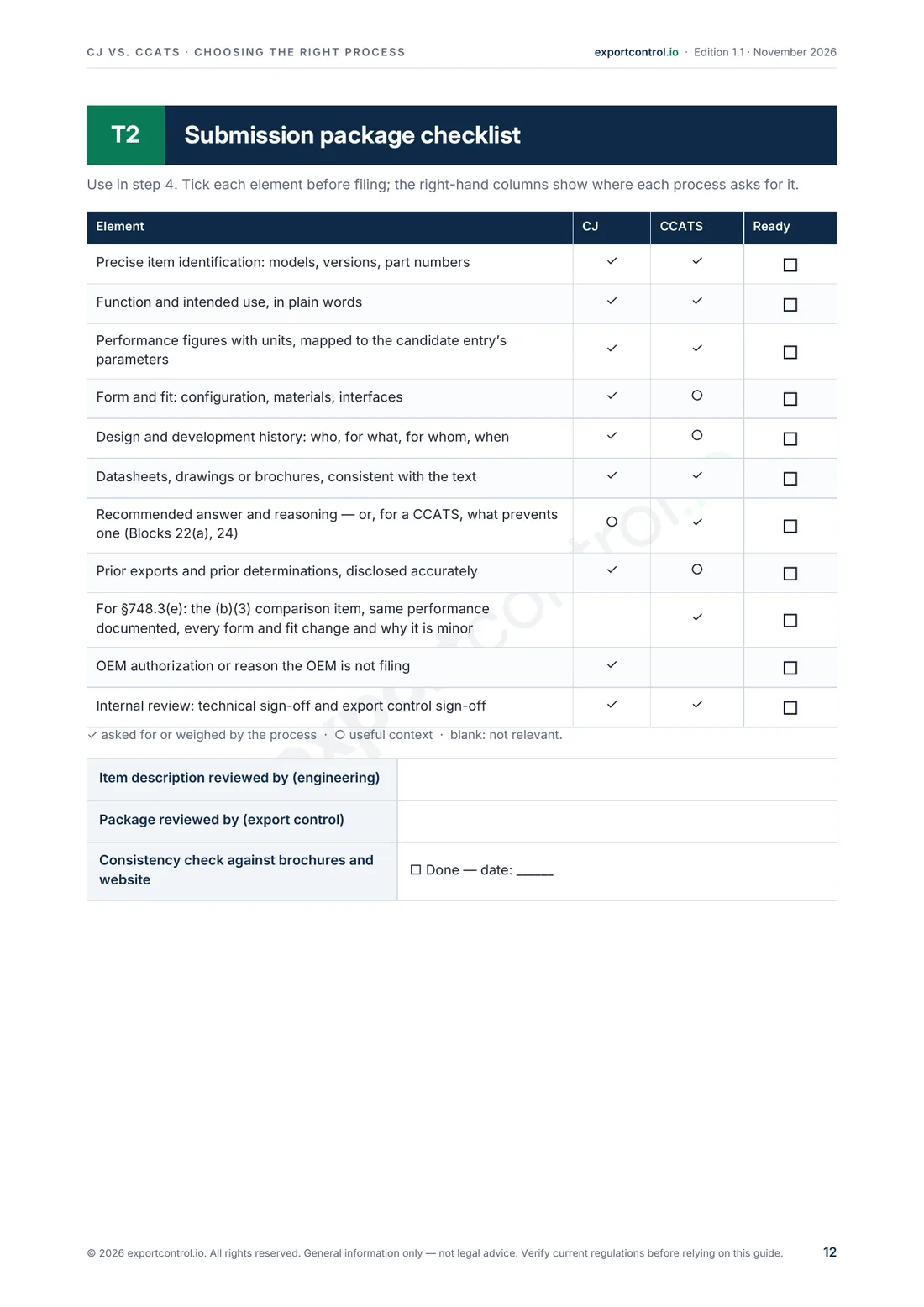
- Tools printed in the guide: four templates and a readiness check
- Sources with section references and their verification date
- Revisions included for 12 months
Printed tools: T1 · Request decision sheet · T2 · Submission package checklist · T3 · Pending-request tracker · T4 · Determination register · Readiness check
Contents
- Before you start: scope and limits
- Why the choice matters
- The rule in one page
- CJ and CCATS side by side
- The method in six steps
- Templates T1 to T4
- Ten pitfalls
- Case study: a classification that could not answer
- Readiness check
What it does not cover
- Encryption classification requests and reports
- License applications, including licenses returned for a jurisdiction question
- Voluntary disclosures after exports on a wrong classification
Assumed knowledge. Running a jurisdiction analysis (USML first), finding an ECCN and applying the “specially designed” test, and knowing who holds the item’s technical facts and history.
Sample pages
Open an image for the full-size page.
Where it connects
Part of a collection
CJ vs. CCATS is one of the eight guides of Classification & Jurisdiction (Understand the Rules), available together at €390 instead of €89 each.