CJ-04Edition 1.0 · November 2026
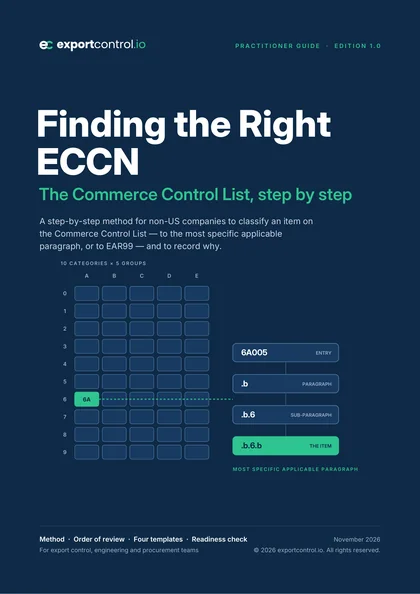
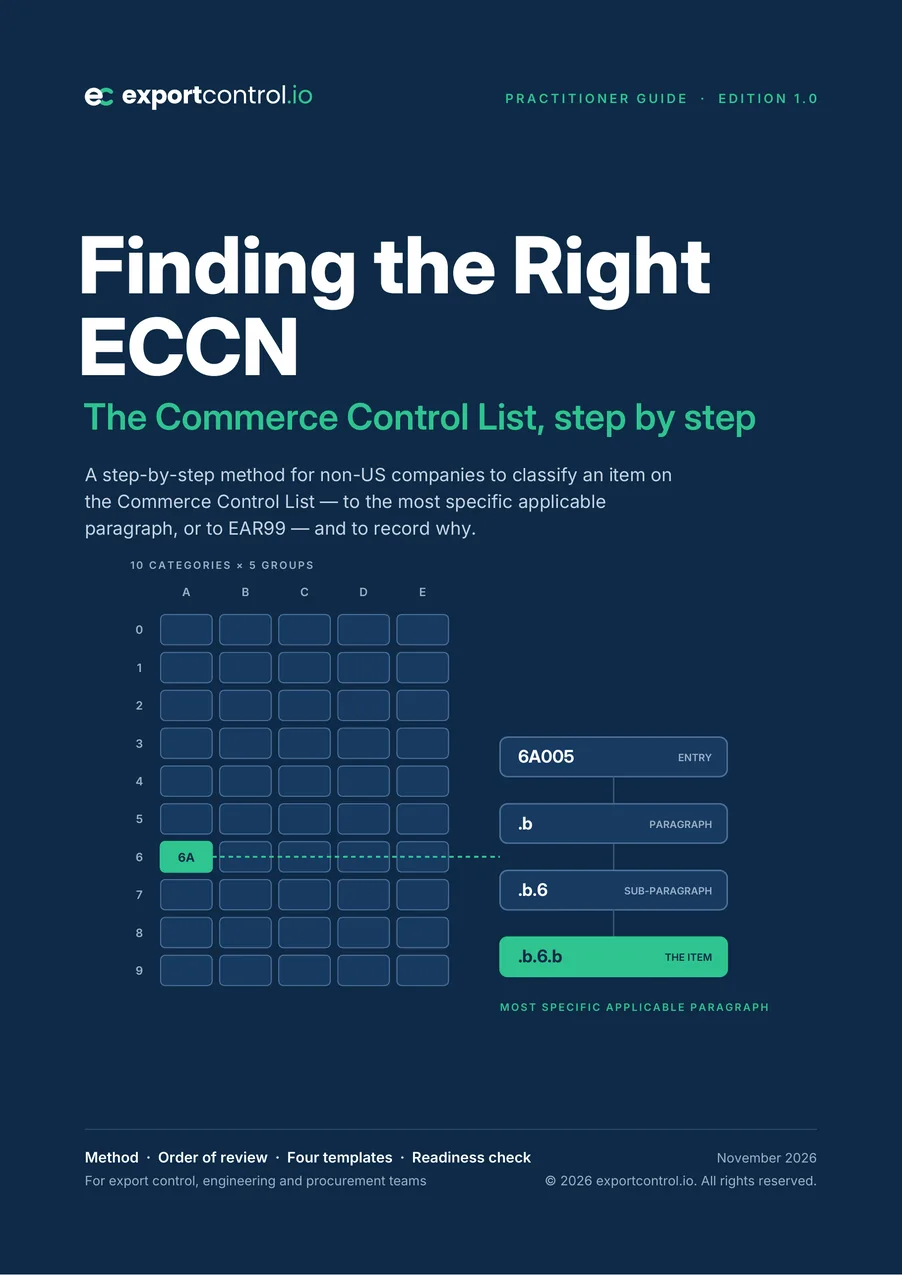
Finding the Right ECCN
The Commerce Control List, step by step
A step-by-step method for non-US companies to classify an item on the Commerce Control List — to the most specific applicable paragraph, or to EAR99 — and to record why.
What this guide settles
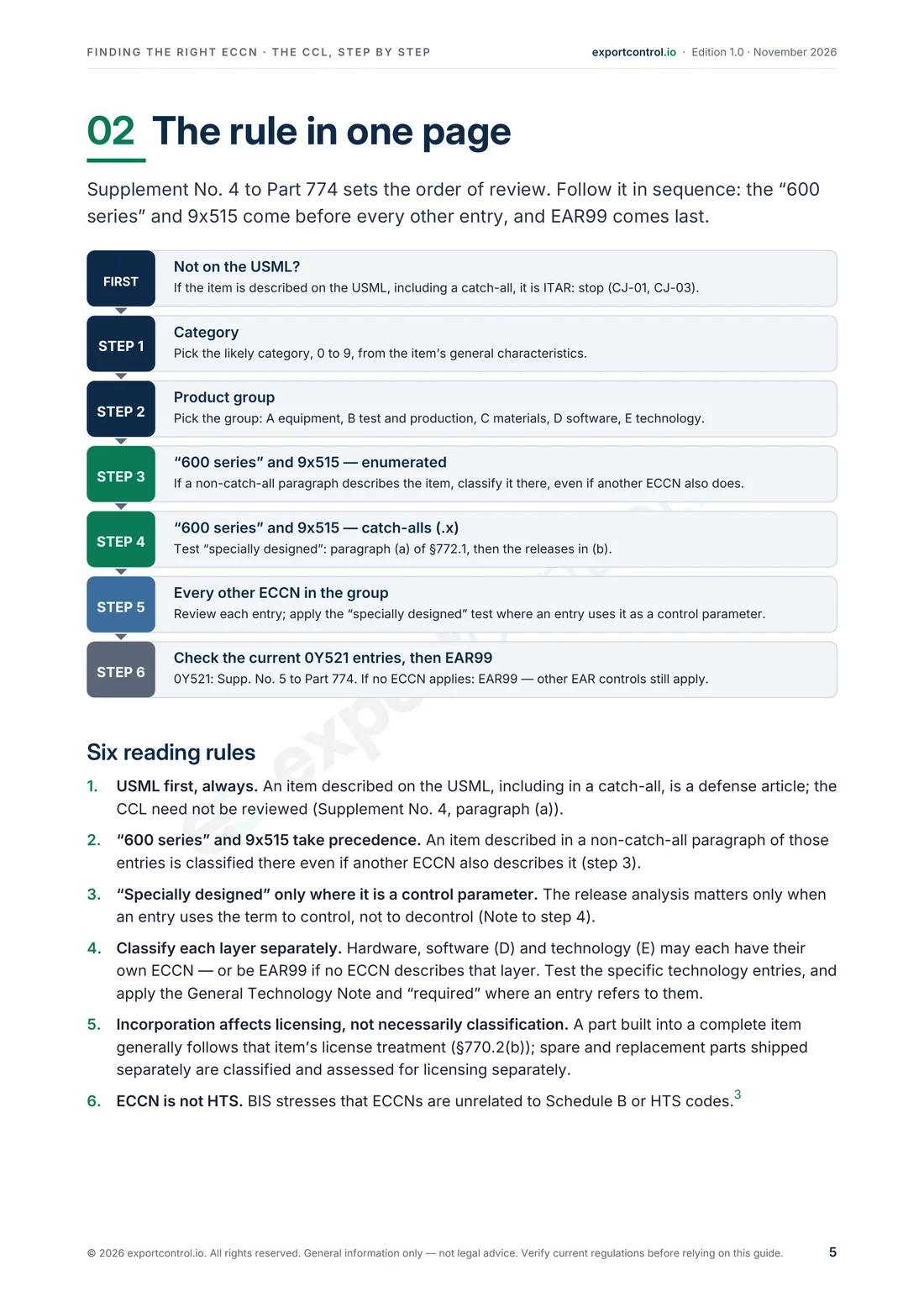
- Follow the order of review: “600 series” and 9x515 first, every other entry next, EAR99 only at the end
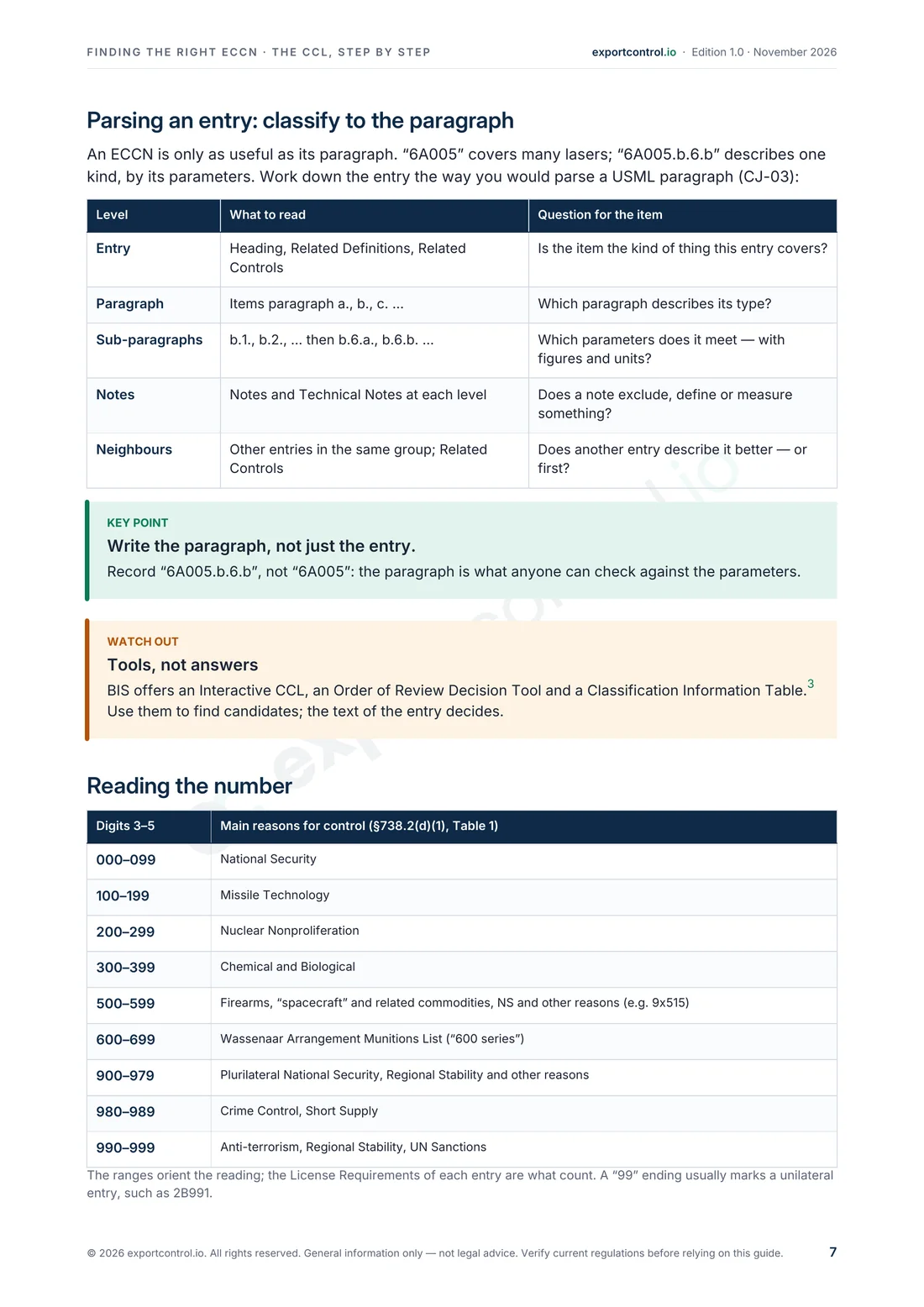
- Classify to the most specific applicable paragraph — “6A005.b.6.b”, not “6A005”
- Read the whole entry: Related Definitions, Notes, Technical Notes, and every Related Control
- A supplier’s ECCN is a starting point, not a classification; ECCN and HTS are unrelated
What you get
- The guide: explanations, method, conditions and limits
- Worked examples: a commented real case and ten pitfalls
- Tools printed in the guide: four templates and a readiness check
- Sources with section references and their verification date
- Revisions included for 12 months
Printed tools: T1 · Classification worksheet · T2 · Entry parsing sheet · T3 · Classification record · T4 · Supplier comparison and change log · Readiness check
Contents
- Before you start: scope and limits
- Why the ECCN decides
- The rule in one page
- How an ECCN entry is built
- The method in six steps
- Templates T1 to T4
- Ten pitfalls
- Case study: “EAR99” on the paperwork
- Readiness check
What it does not cover
- Information security items in Category 5, Part 2
- “600 series” and 9x515 items in depth, including .y paragraphs
- What the ECCN means for a transaction: Country Chart, license exceptions, end-use and end-user controls
Assumed knowledge. Knowing that the item is not on the USML and is subject to the EAR, its function and technical parameters, and where to read the current CCL and its recent amendments.
Sample pages
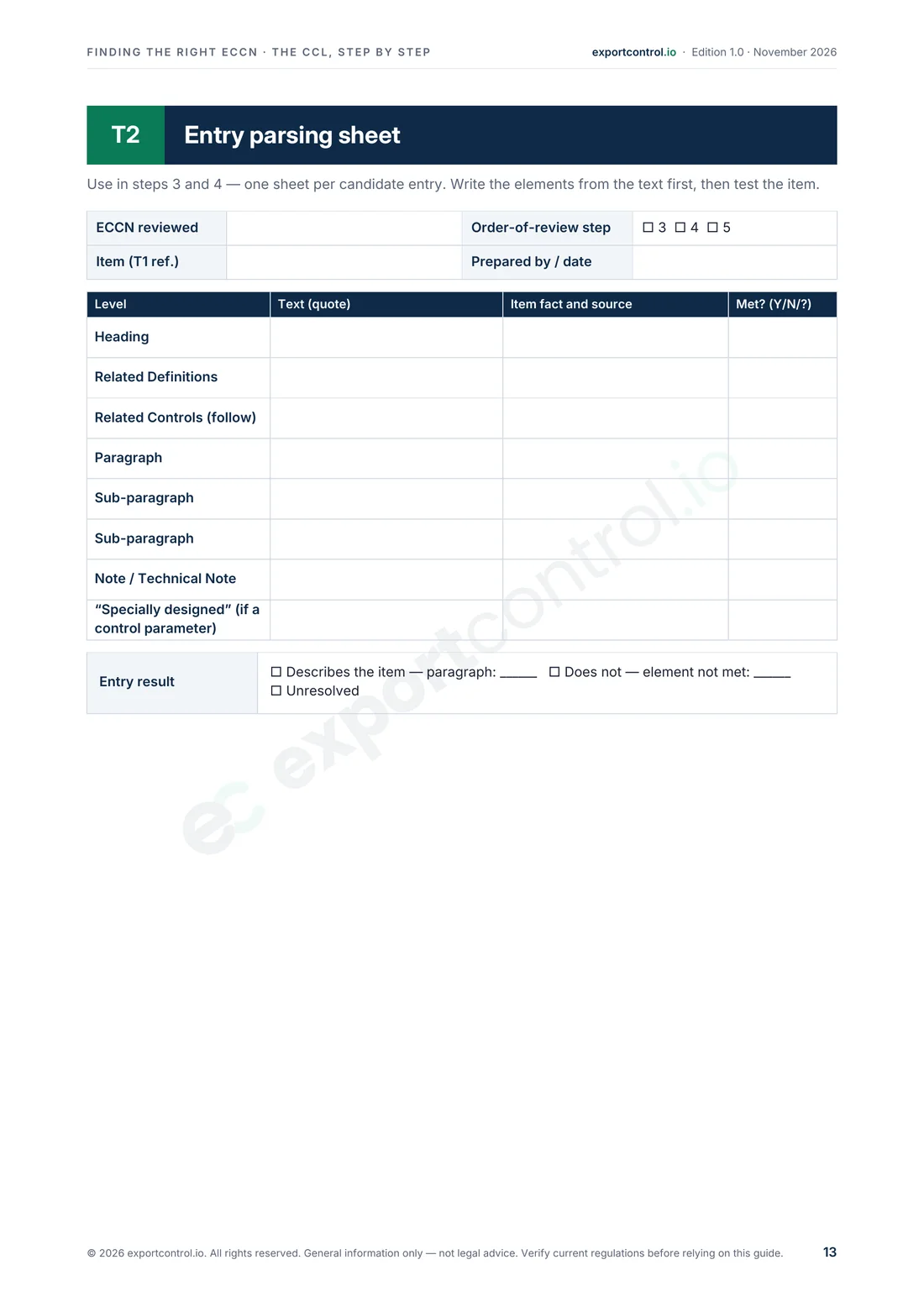
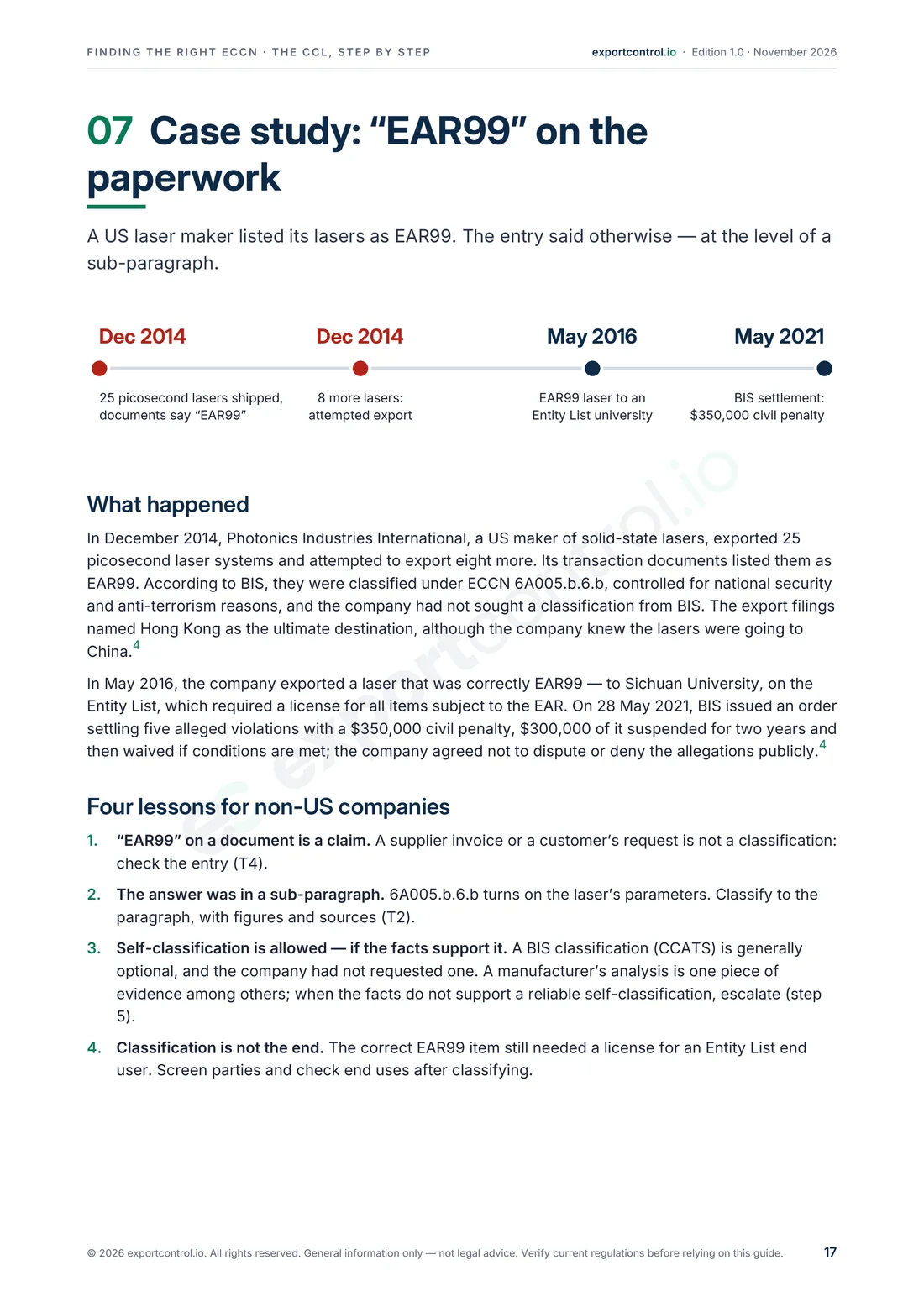
Open an image for the full-size page.
Where it connects
“Specially Designed” Decoded
Finding the Right ECCN searches the CCL; “Specially Designed” Decoded applies the EAR definition where an entry uses it.
EAR-06EAR License Exceptions
Finding the Right ECCN gives the classification and reasons for control; EAR License Exceptions starts from them to decide whether an exception applies.
EAR-01EAR99 Explained
Finding the Right ECCN reaches a classification, EAR99 included; EAR99 Explained starts from that result and covers the checks it does not answer.
CJ-07Classification Evidence File
Finding the Right ECCN explains the classification reasoning; the Evidence File organises its justification.
Part of a collection
Finding the Right ECCN is one of the eight guides of Classification & Jurisdiction (Understand the Rules), available together at €390 instead of €89 each.