CJ-07Edition 1.0 · November 2026
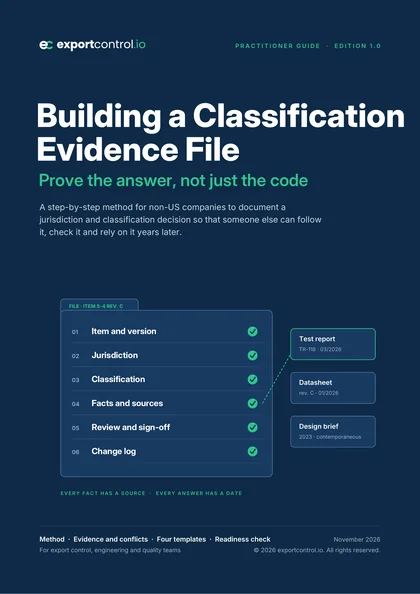
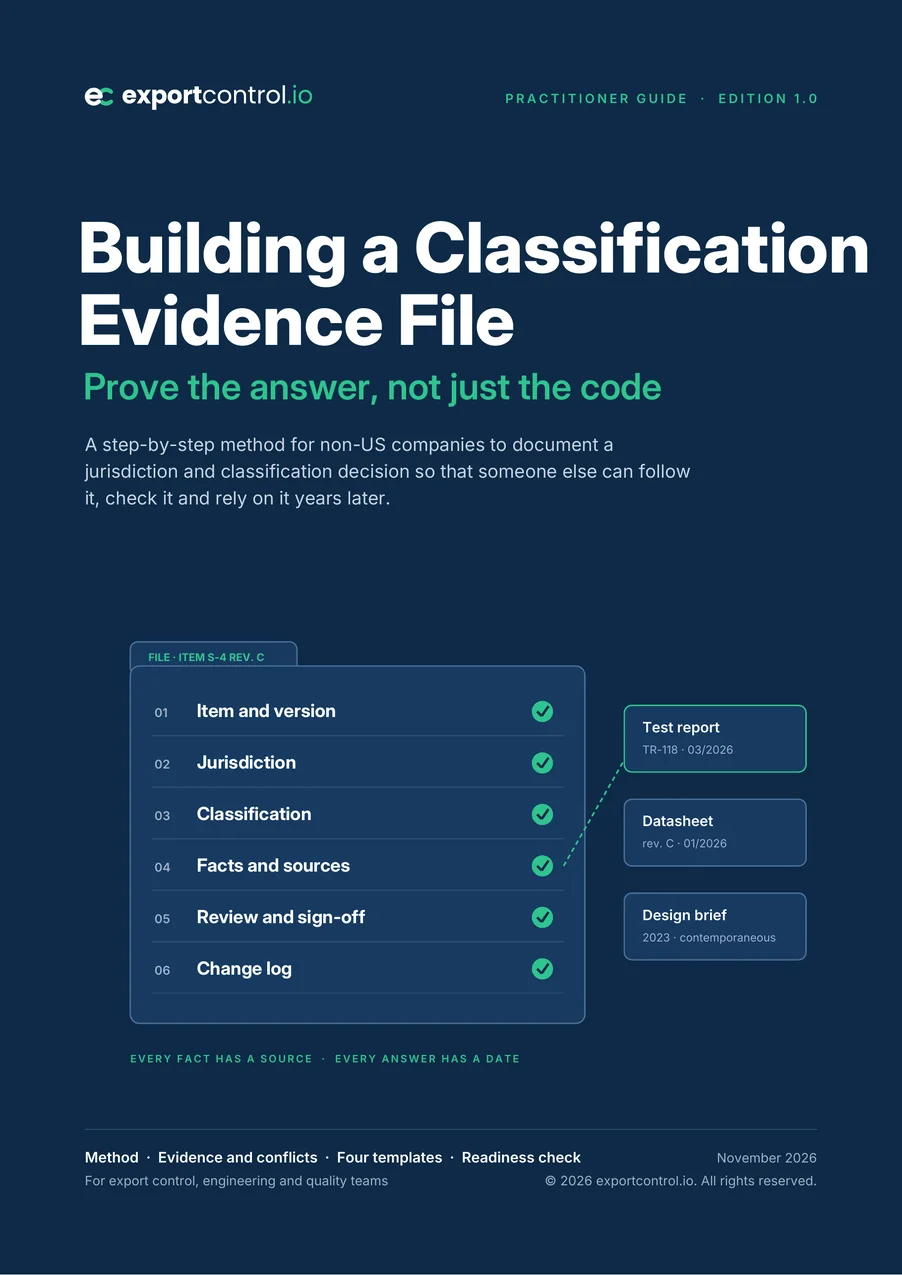
Classification Evidence File
Prove the answer, not just the code
A step-by-step method for non-US companies to document a jurisdiction and classification decision so that someone else can follow it, check it and rely on it years later.
What this guide settles
- A file has four layers: decision, analysis, facts, sources — each resting on the one below
- Every fact has a dated source; the entries ruled out are part of the answer
- The classification that counts is the one in the system: link every ERP and invoice code to a file
- Conflicts and changes are logged, superseded versions kept, retention aligned with §122.5 and Part 762
What you get
- The guide: explanations, method, conditions and limits
- Worked examples: six questions every file must answer, a commented real case and ten pitfalls
- Tools printed in the guide: four templates and a readiness check
- Sources with section references and their verification date
- Revisions included for 12 months
Printed tools: T1 · File index and cover sheet · T2 · Source register and fact table · T3 · Classification decision record · T4 · Conflict and change log · Readiness check
Contents
- Before you start: scope and limits
- Why the file matters
- The rule in one page
- Weighing evidence and conflicts
- The method in six steps
- Templates T1 to T4
- Ten pitfalls
- Case study: the code on the invoice
- Readiness check
What it does not cover
- Customs tariff classification (HS, HTS, Schedule B)
- De minimis and foreign direct product calculations
- Voluntary disclosures after a classification error
Assumed knowledge. Running jurisdiction and classification analyses, knowing when to ask DDTC or BIS for an official answer, and where the company keeps its product, engineering and shipping data.
Sample pages
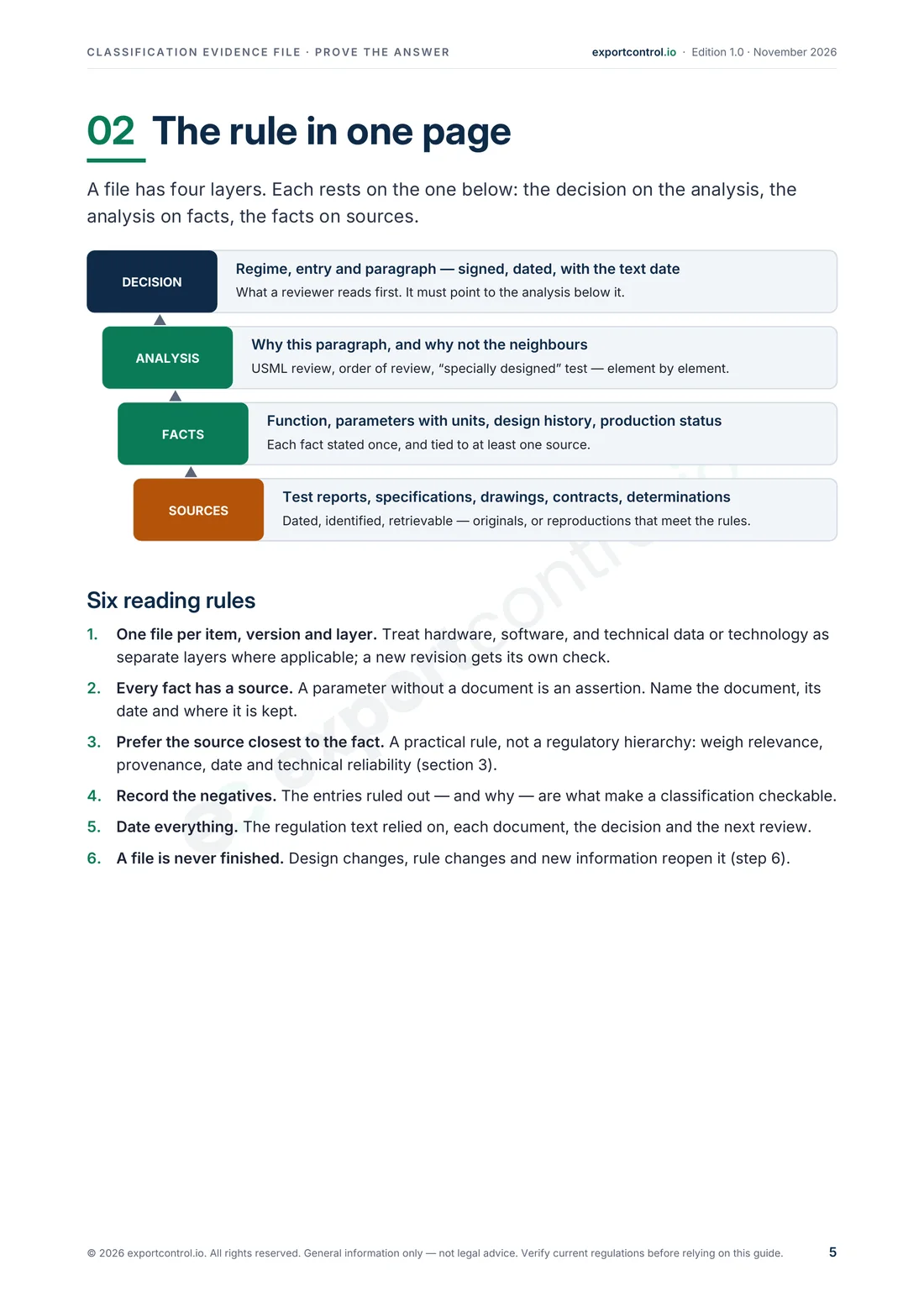
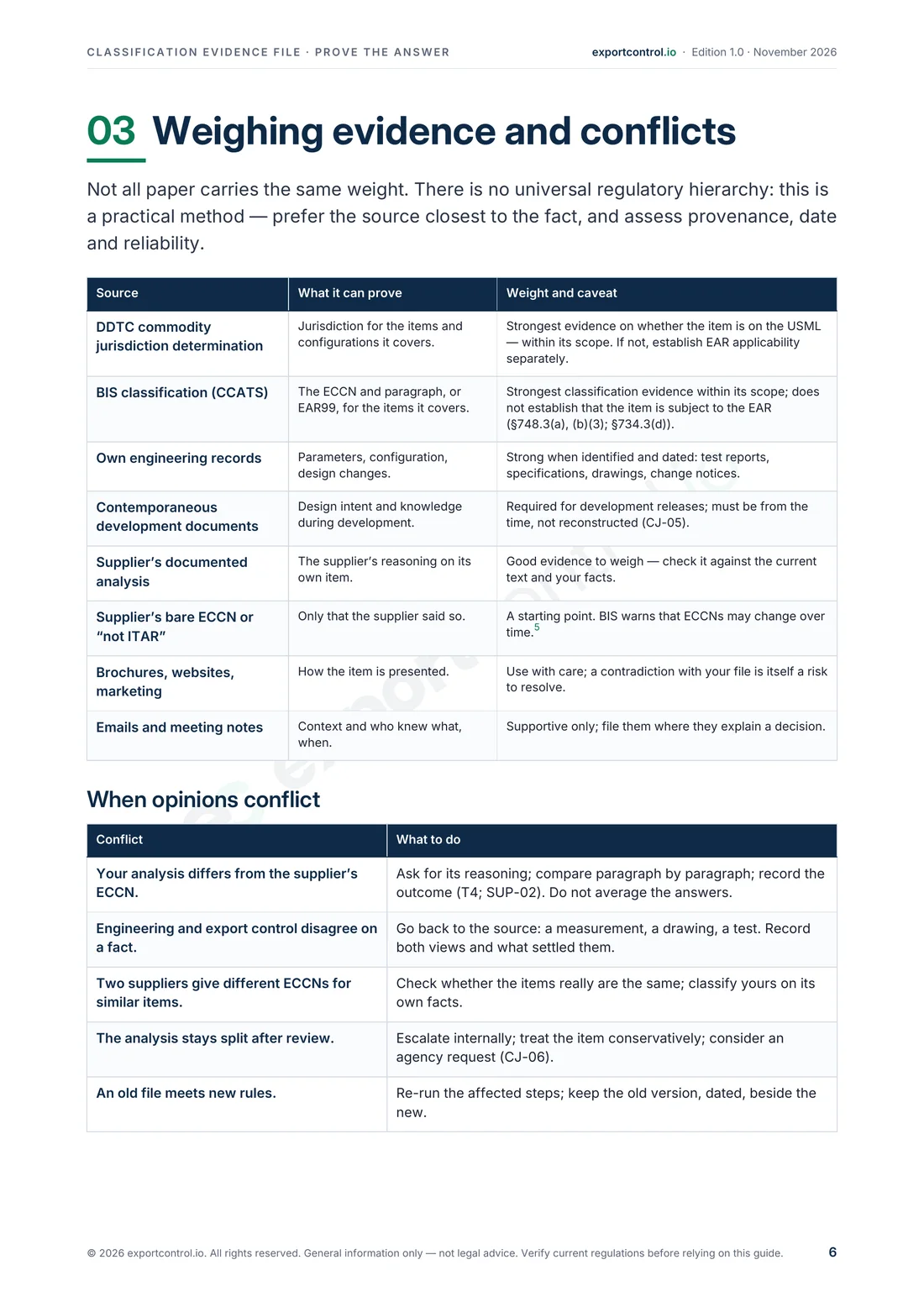
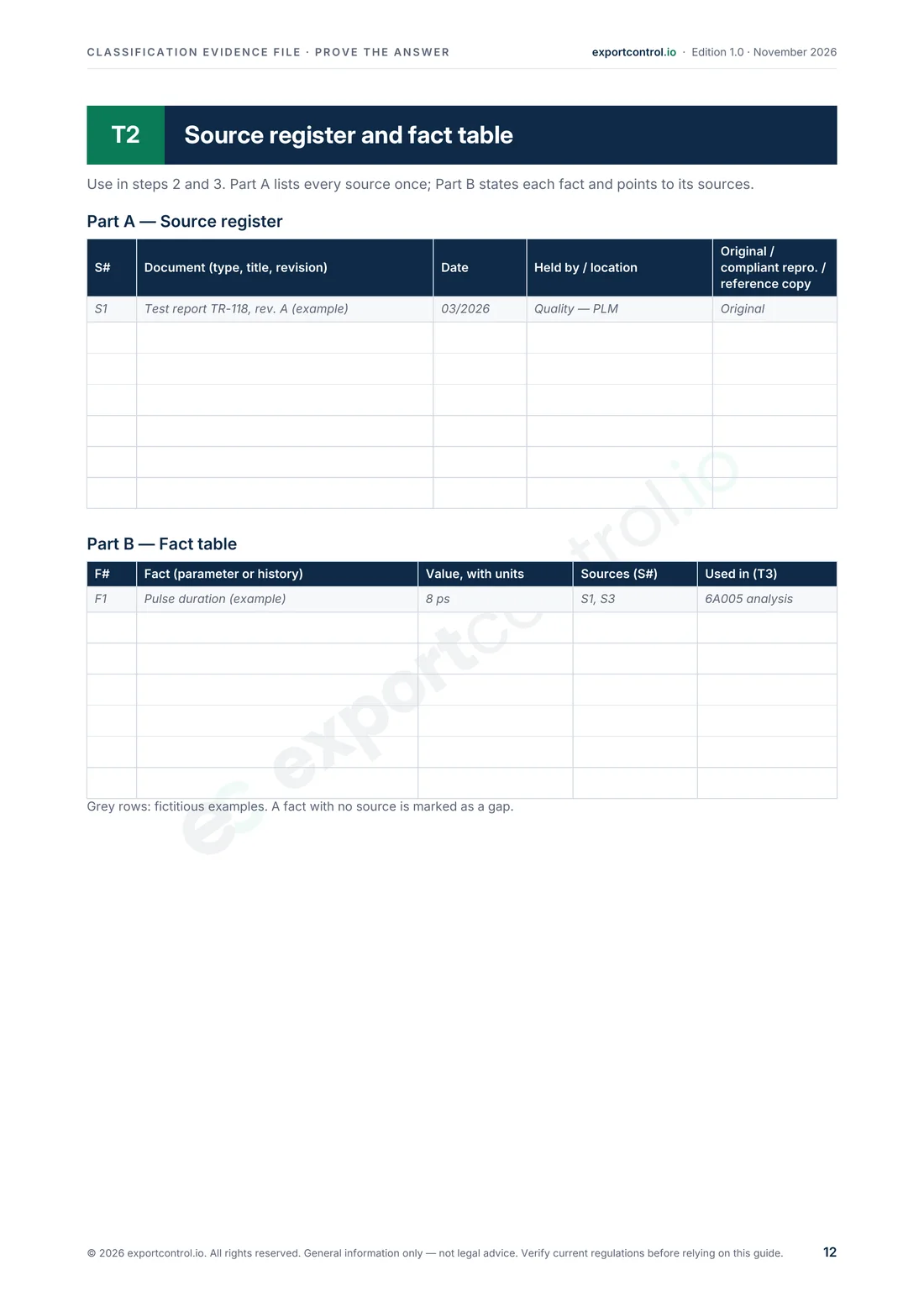
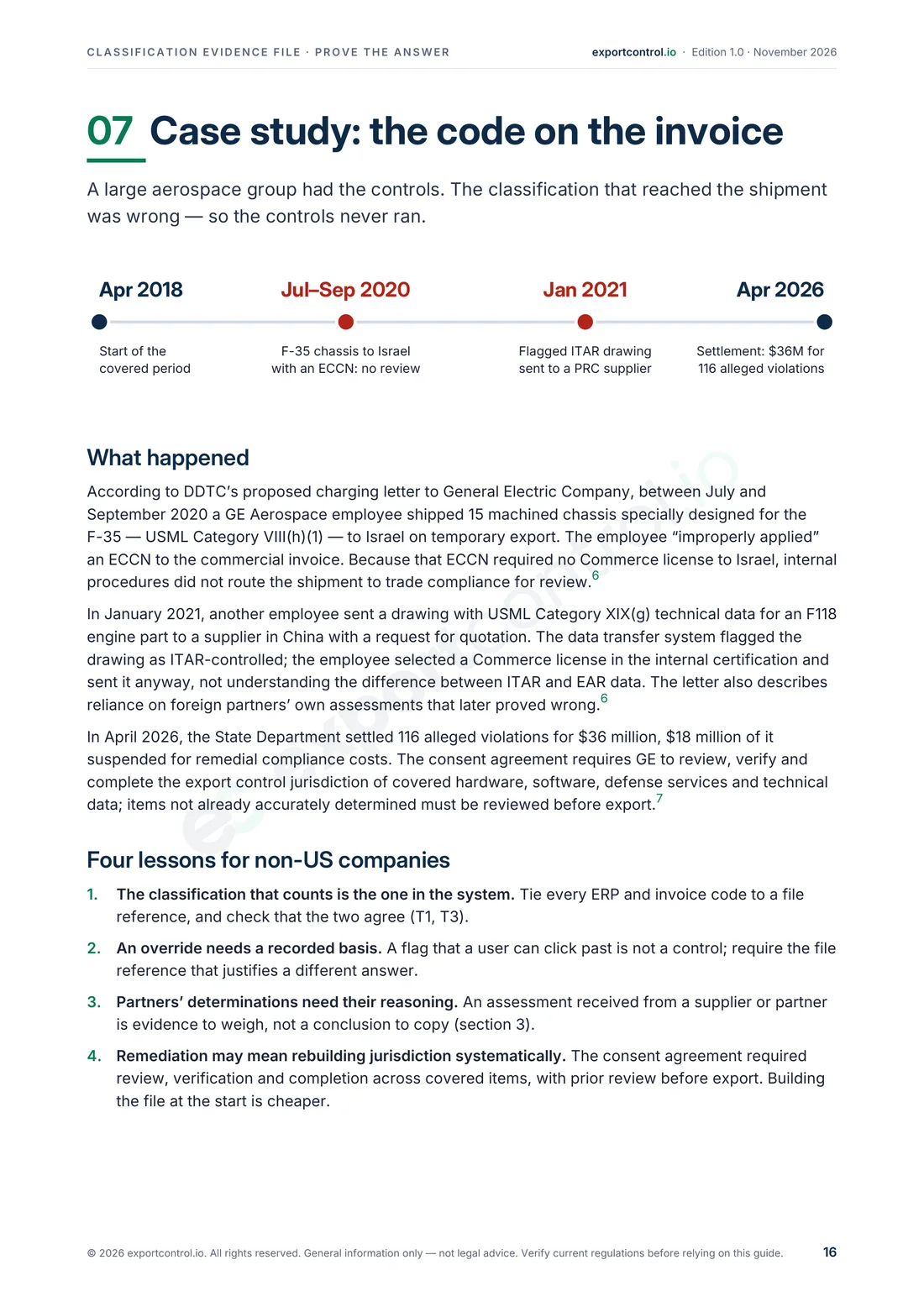
Open an image for the full-size page.
Where it connects
ITAR-Free
The Evidence File documents one classification; ITAR-Free builds a product-level claim on many of them.
SUP-01Supplier Classification Requests
Requesting Export Classification Information runs supplier requests across the whole supplier base; the Evidence File documents the classification behind one item.
CJ-04Finding the Right ECCN
Finding the Right ECCN explains the classification reasoning; the Evidence File organises its justification.
Part of a collection
Classification Evidence File is one of the eight guides of Classification & Jurisdiction (Understand the Rules), available together at €390 instead of €89 each.