SUP-01Edition 1.0 · November 2026
Supplier Classification Requests
Building and running a supplier classification programme
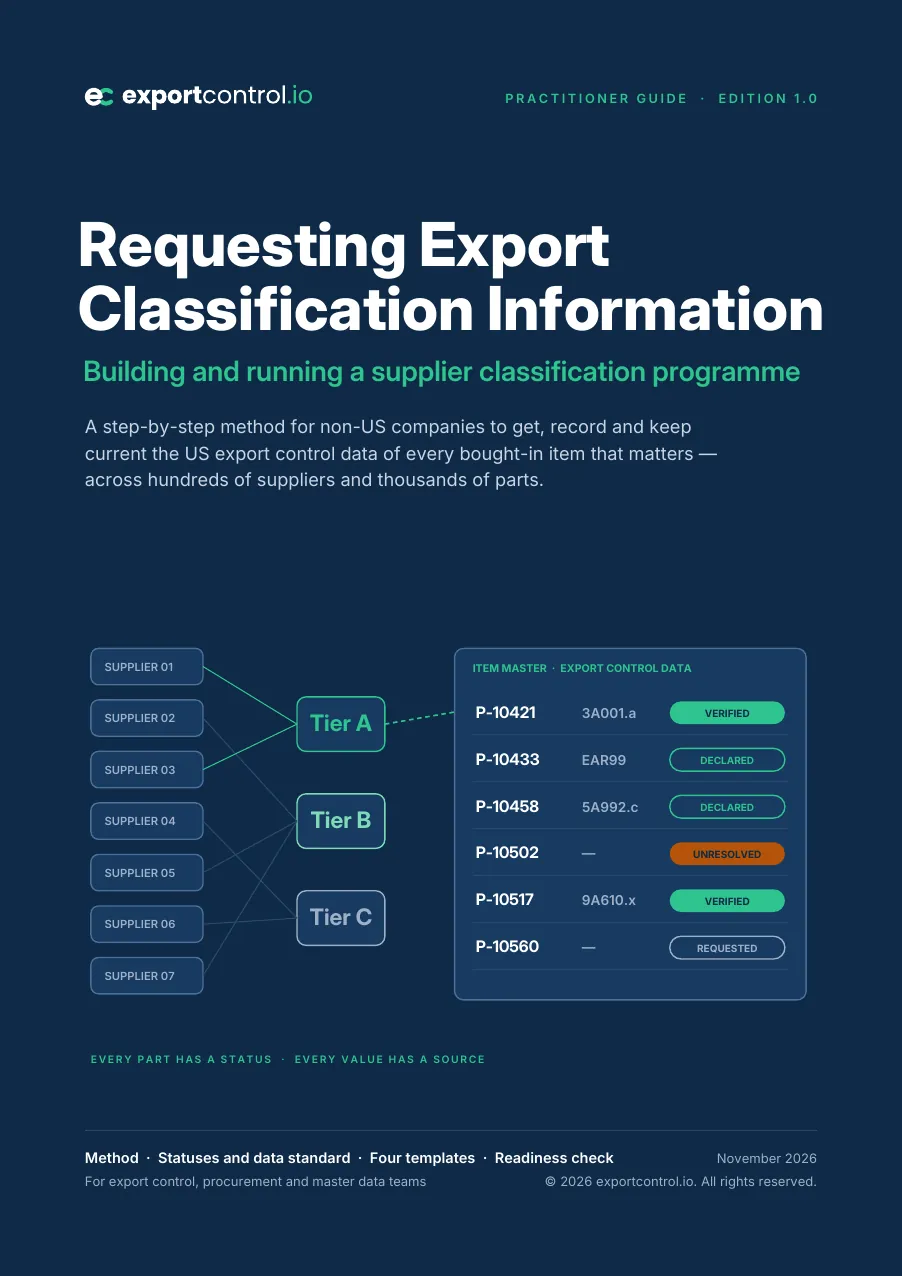
A step-by-step method for non-US companies to get, record and keep current the US export control data of every bought-in item that matters — across hundreds of suppliers and thousands of parts. The free checklist handles one supplier answer; this guide runs the process across your supplier base.
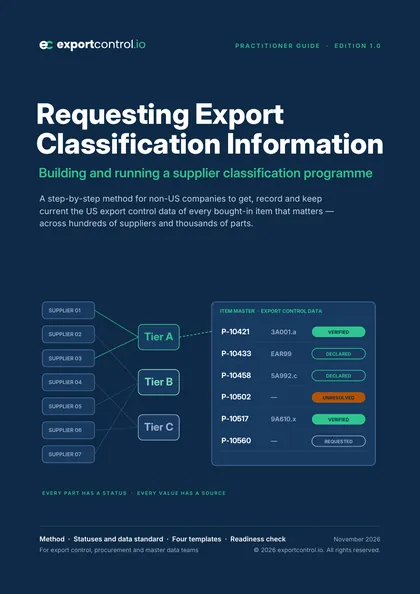
What this guide settles
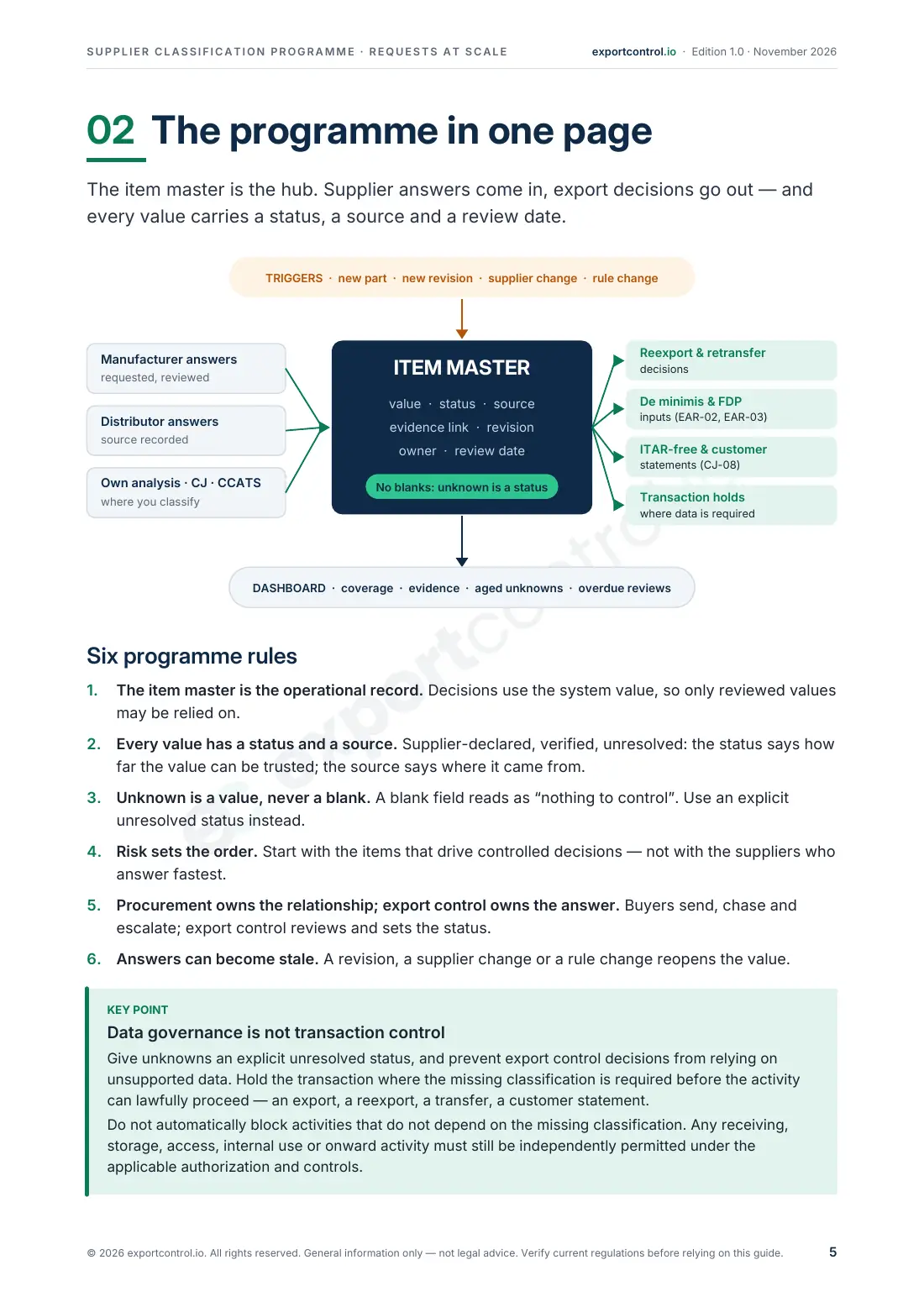
- The item master is the hub: every value carries a status, a source, the revision it covers and a review date
- Unknown is a status, never a blank — and no export control decision relies on unsupported data
- Risk sets the order: hard rules and a score put tier A items first, with a baseline or full request per tier
- Procurement owns the relationship, export control owns the answer — with deadlines, escalation and a coverage dashboard
What you get
- The guide: explanations, method, conditions and limits
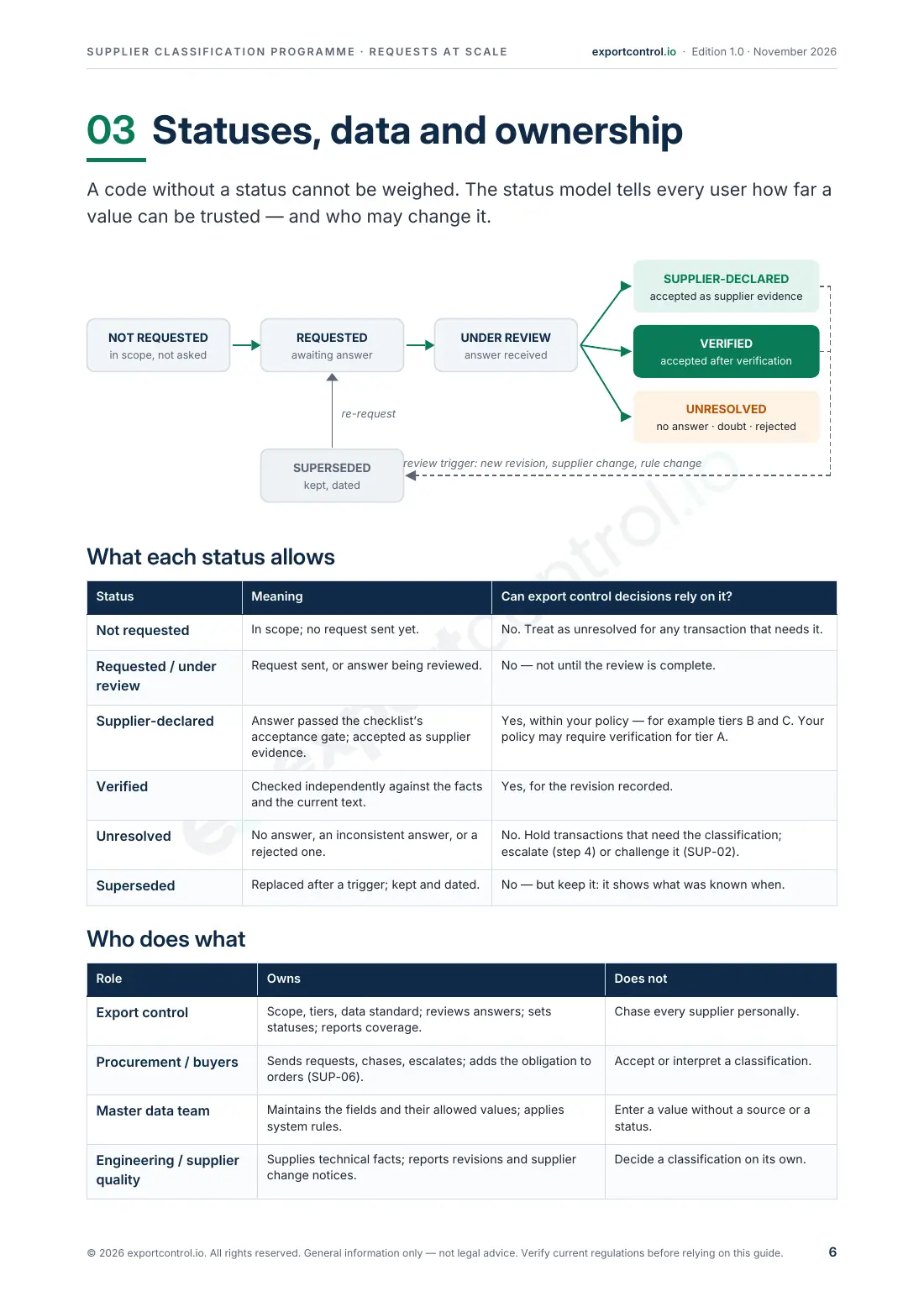
- Worked examples: a status model, who does what, two request tiers, an escalation ladder, an illustrative case with a real-case comparison and ten pitfalls
- Tools printed in the guide: four templates, including an item master data standard and a coverage dashboard, and a readiness check
- Sources with section references and their verification date
- Revisions included for 12 months
Printed tools: T1 · Supplier and item risk-prioritization matrix · T2 · Campaign tracker with status, deadlines and escalation · T3 · Export control item master data standard · T4 · Programme dashboard and update log · Readiness check
Contents
- Before you start: scope and limits
- Why a programme, not a request
- The programme in one page
- Statuses, data and ownership
- The method in six steps
- Templates T1 to T4
- Ten pitfalls
- Case study: the field nobody owned
- Readiness check
What it does not cover
- Customs tariff and EU or national dual-use classification
- De minimis and foreign direct product calculations
- Voluntary disclosures after supplier data proves wrong
Assumed knowledge. Knowing what to ask a supplier for one item and how to review one answer (the free checklist), the basics of jurisdiction and classification, and how your ERP and purchasing processes work.
Sample pages
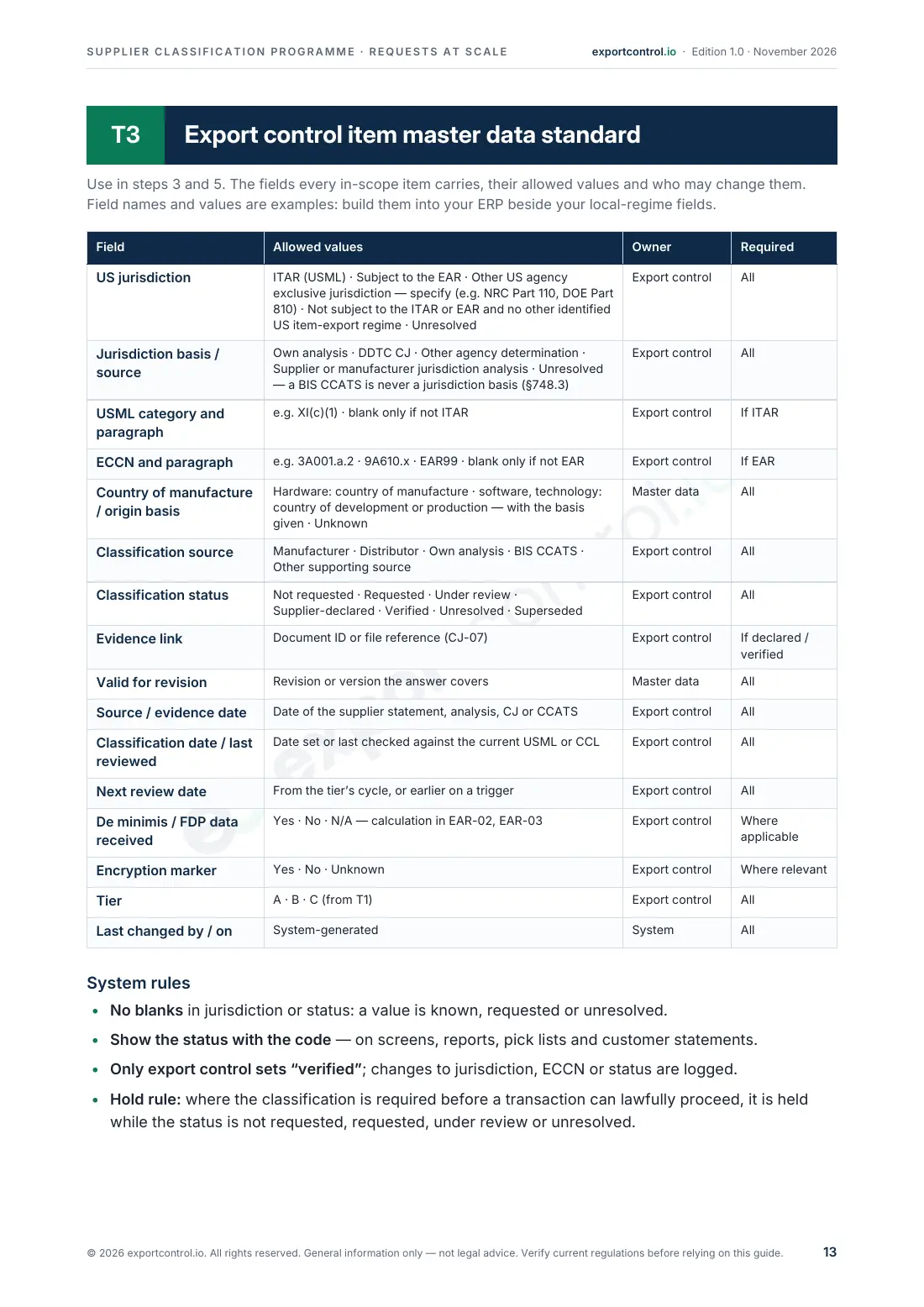
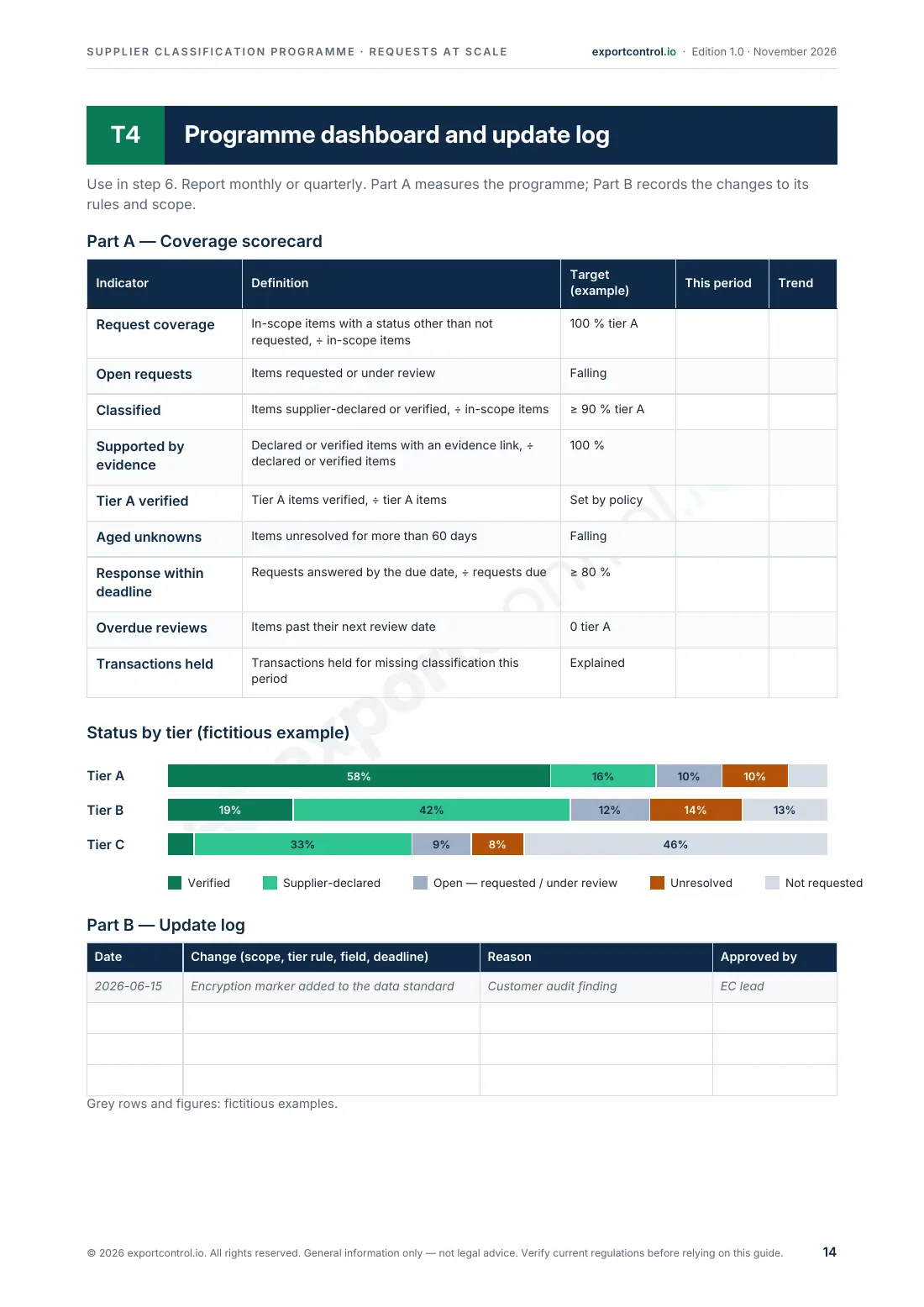
Open an image for the full-size page.
Where it connects
Buying Through Distributors & Resellers
Requesting Export Classification Information asks the manufacturer directly; Buying Through Distributors & Resellers weighs what reaches you through several hands.
SUP-02Challenging a Supplier’s Classification
Requesting Export Classification Information runs requests across the supplier base; Challenging a Supplier’s Classification resolves the answers you cannot accept.
CJ-07Classification Evidence File
Requesting Export Classification Information runs supplier requests across the whole supplier base; the Evidence File documents the classification behind one item.
Part of a collection
Supplier Classification Requests is one of the eight guides of Suppliers & Procurement (Manage Transactions), available together at €390 instead of €89 each.