CJ-03Edition 1.0 · November 2026
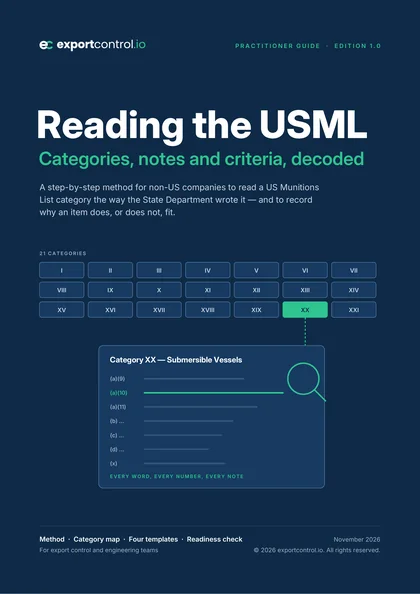
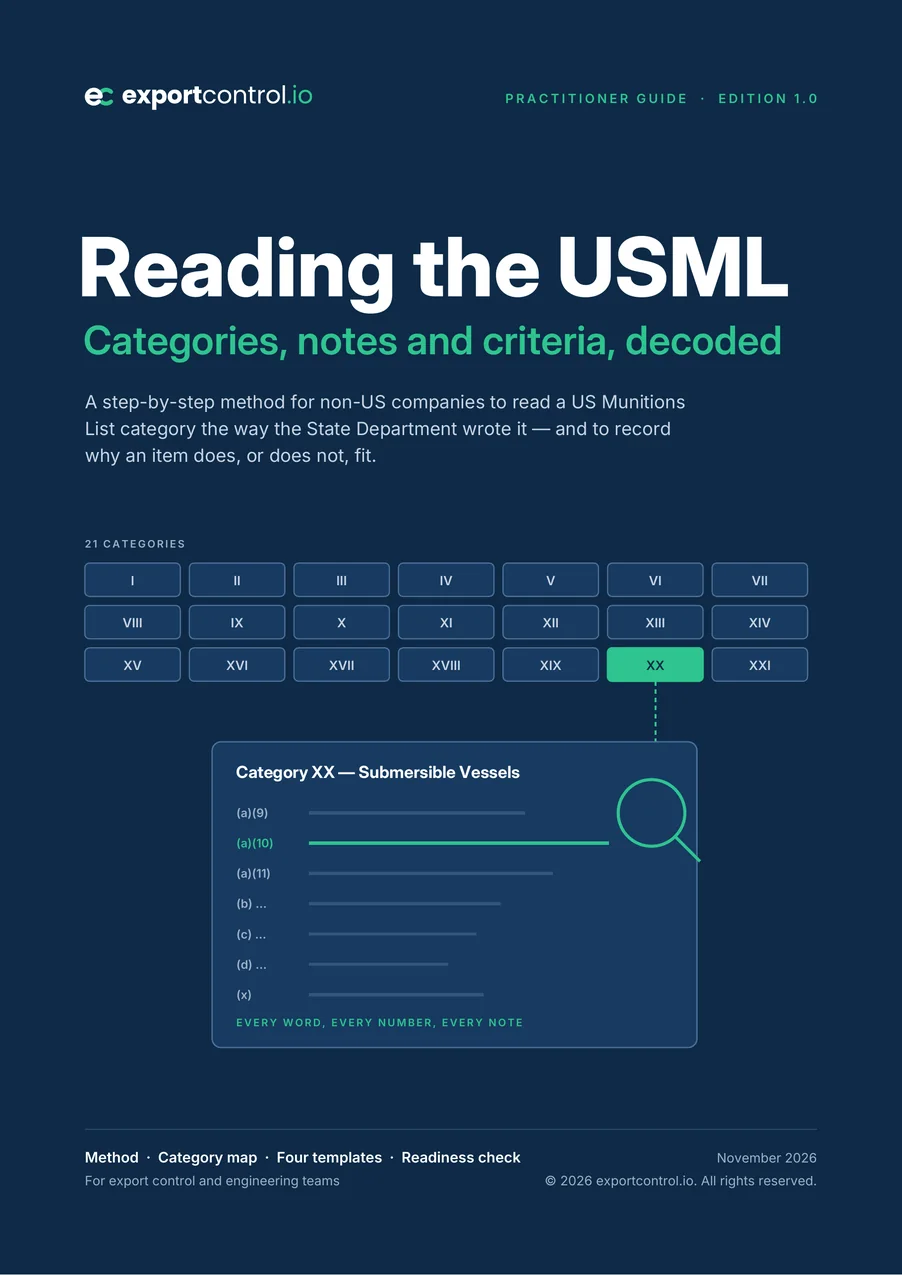
Reading the USML
Categories, notes and criteria, decoded
A step-by-step method for non-US companies to read a US Munitions List category the way the State Department wrote it — and to record why an item does, or does not, fit.
What this guide settles
- Category titles orient; paragraphs decide — an item is a defense article only if a paragraph describes it, element by element
- Read the whole category first: notes, interpretations and definitions are part of the text
- Enumerated entries before catch-alls; “and”, “or”, units and thresholds decide the reading
- Every reading is tied to the date of the text it relied on
What you get
- The guide: explanations, method, conditions and limits
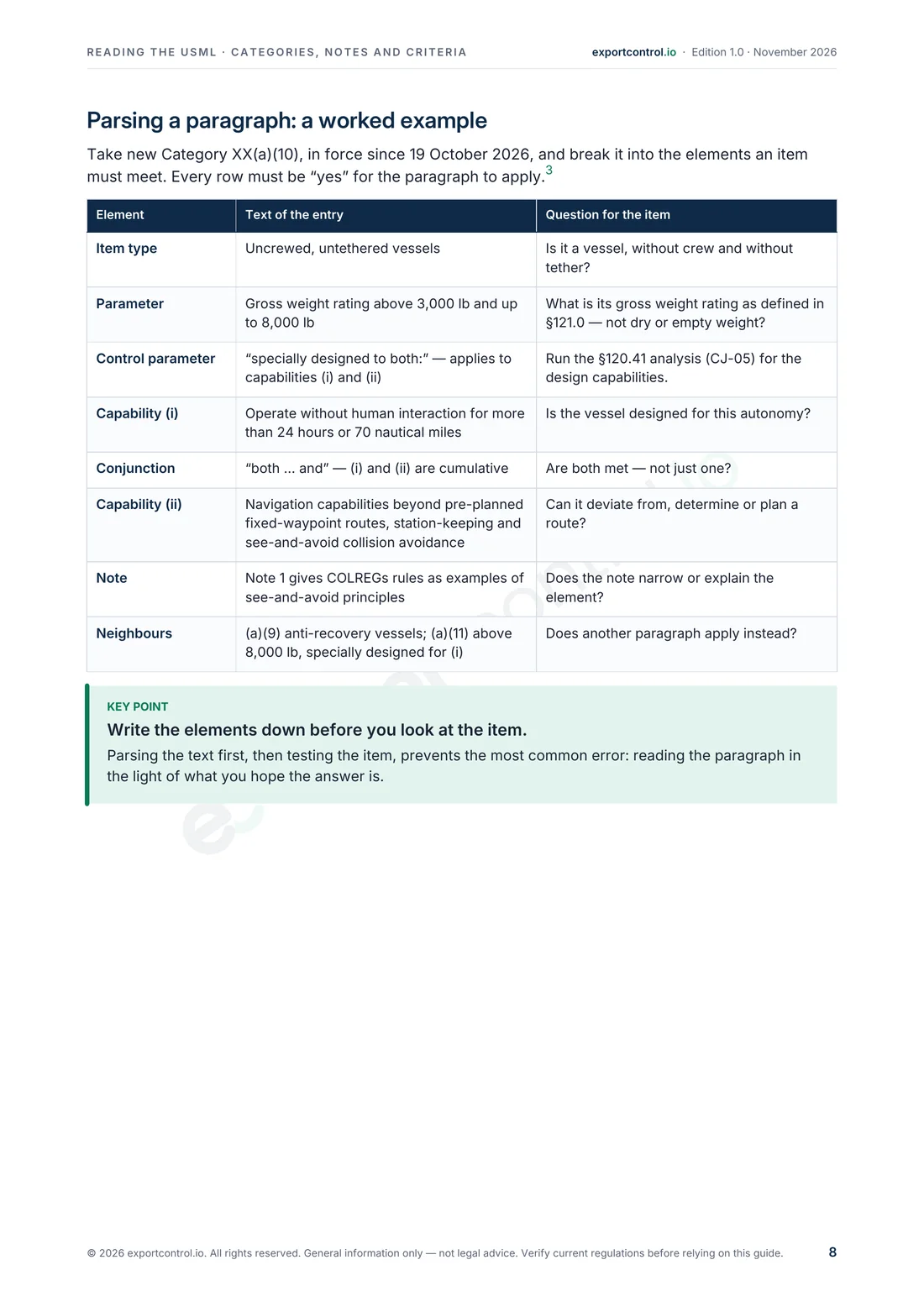
- Worked examples: a worked paragraph, a case study on Category XX(a) and ten pitfalls
- Tools printed in the guide: four templates and a readiness check
- Sources with section references and their verification date
- Revisions included for 12 months
Printed tools: T1 · Category screening sheet and category map · T2 · Paragraph parsing worksheet · T3 · USML reading record · T4 · Text and amendment log · Readiness check
Contents
- Before you start: scope and limits
- Why the reading decides
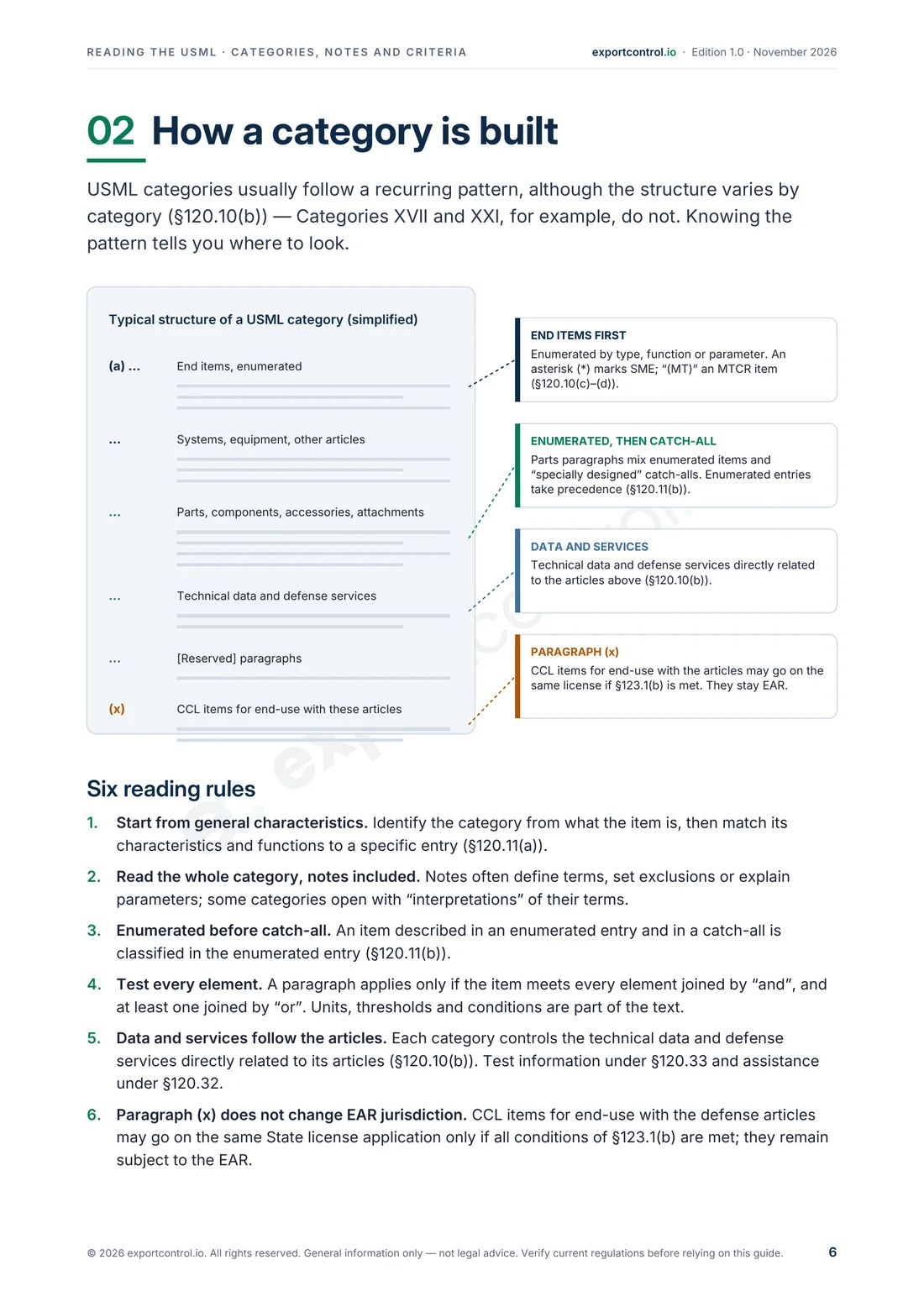
- How a category is built
- The words that decide the answer
- The method in six steps
- Templates T1 to T4
- Ten pitfalls
- Case study: Category XX(a)
- Readiness check
What it does not cover
- The full “specially designed” analysis behind a catch-all
- A genuine doubt between USML and EAR after a careful reading: the commodity jurisdiction route
- Category XXI (case-by-case designations) and Category XVII (classified articles)
Assumed knowledge. The ITAR order of review and the difference between jurisdiction, classification and scope (ITAR or EAR?), the item’s function and technical parameters, and where to read the current text.
Sample pages
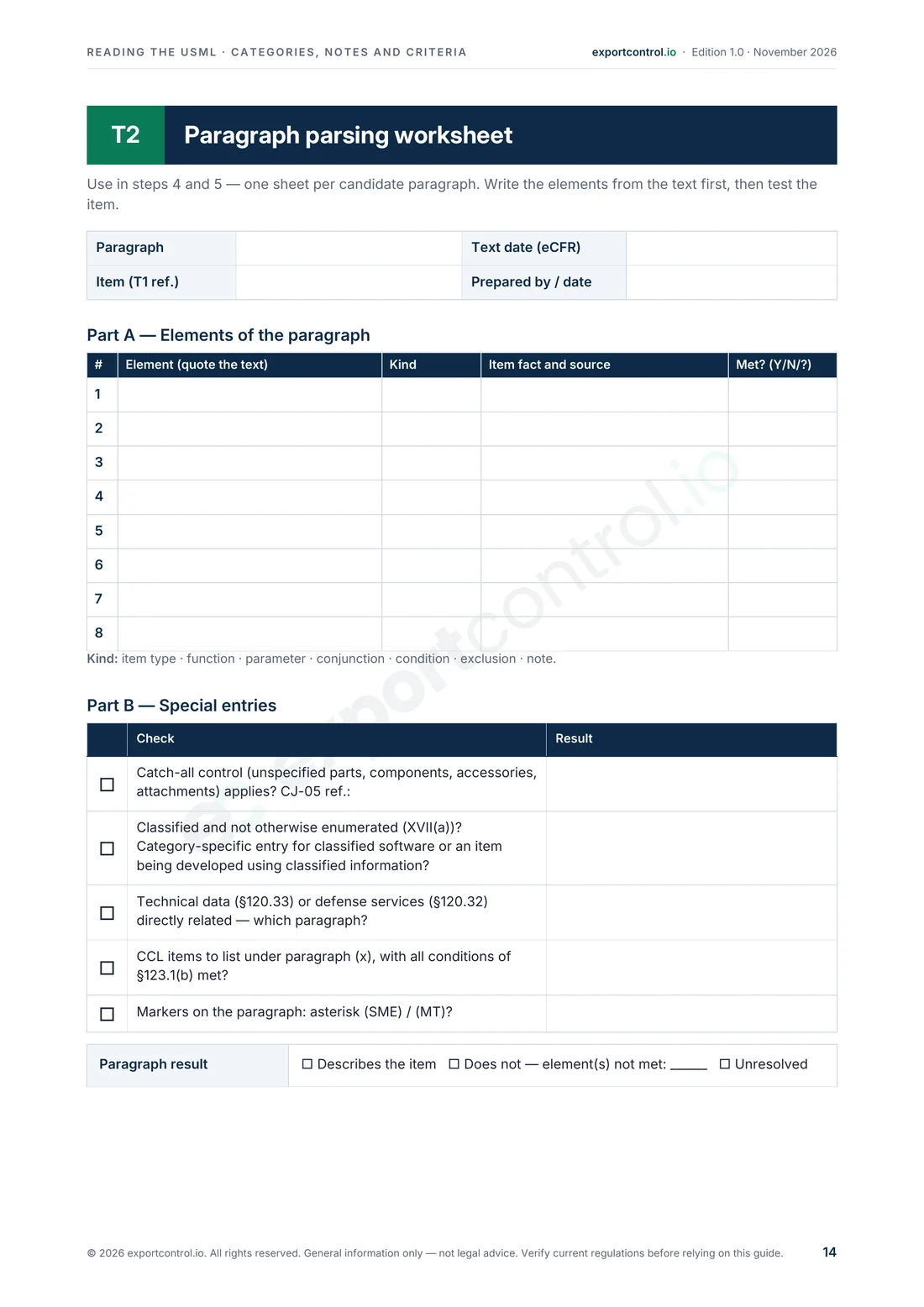
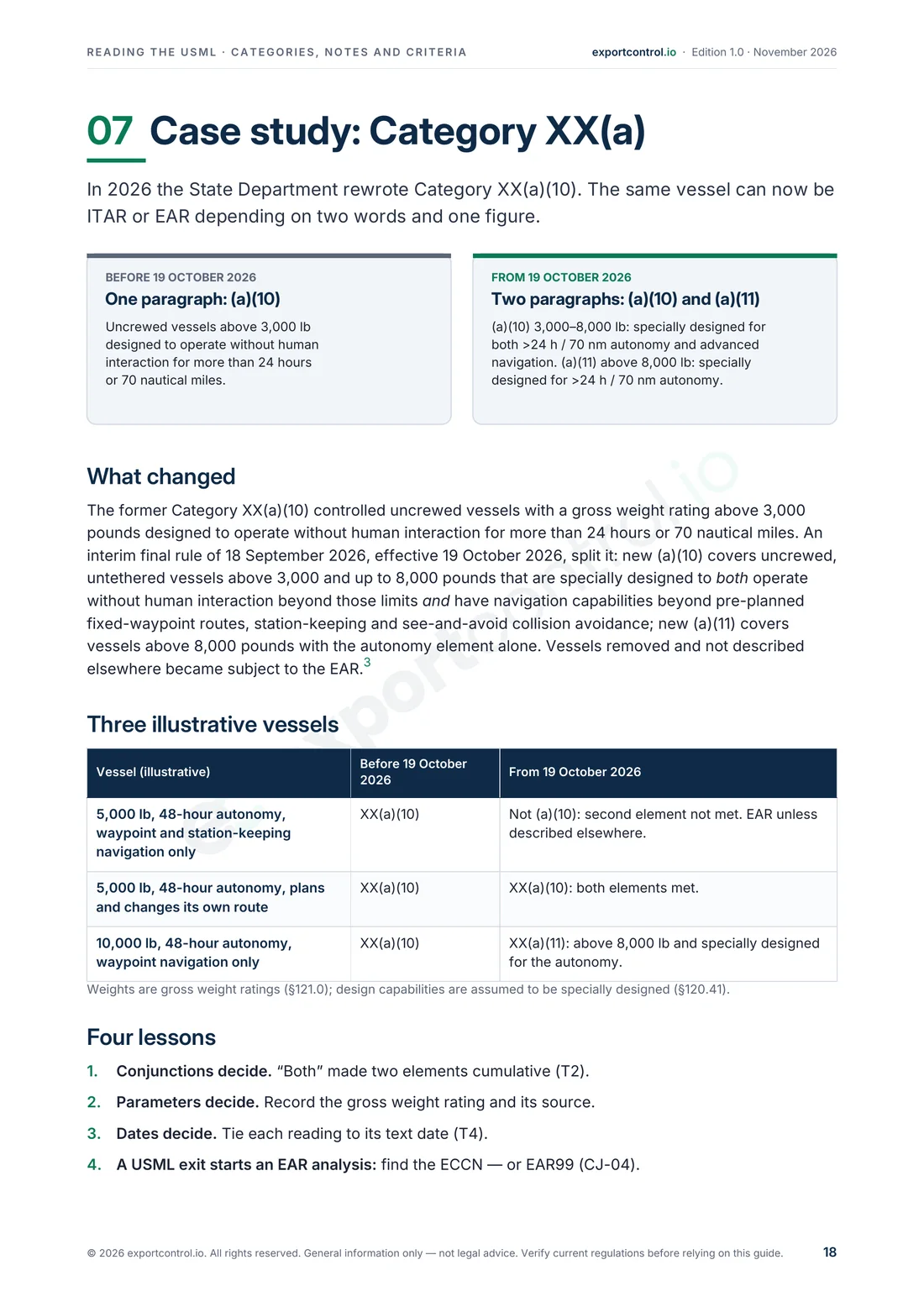
Open an image for the full-size page.
Where it connects
ITAR or EAR?
ITAR or EAR? runs the whole order of review; Reading the USML goes deep on reading one category, paragraph by paragraph.
CJ-05“Specially Designed” Decoded
Reading the USML finds the candidate paragraph; “Specially Designed” Decoded tests the catch-all term inside it.
ITAR-01Reading a DSP-5
Reading the USML confirms the item is a defense article; Reading a DSP-5 reads the licence that authorizes it.
Part of a collection
Reading the USML is one of the eight guides of Classification & Jurisdiction (Understand the Rules), available together at €390 instead of €89 each.