TEC-01Edition 1.0 · November 2026
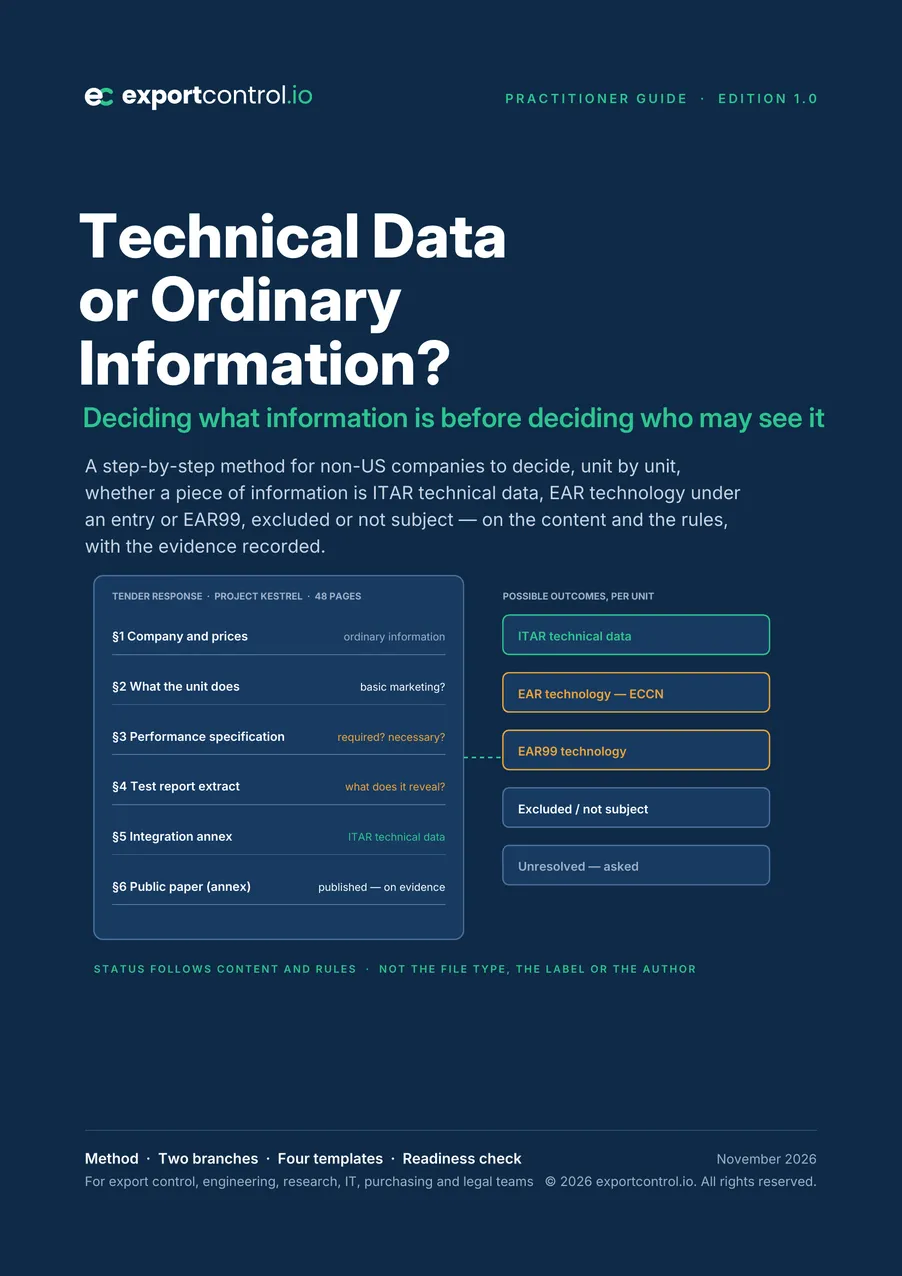
Technical Data or Ordinary Information?
Deciding what information is before deciding who may see it
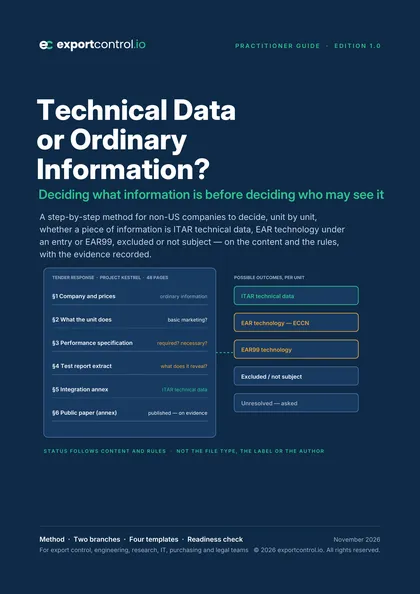
A step-by-step method for non-US companies to decide, unit by unit, whether a piece of information is ITAR technical data, EAR technology under an entry or EAR99, excluded or not subject — on the content and the rules, with the evidence recorded.
What this guide settles
- Content decides what the information reveals; jurisdiction, definition and exclusions decide its status — three tests, not one impression of sensitivity
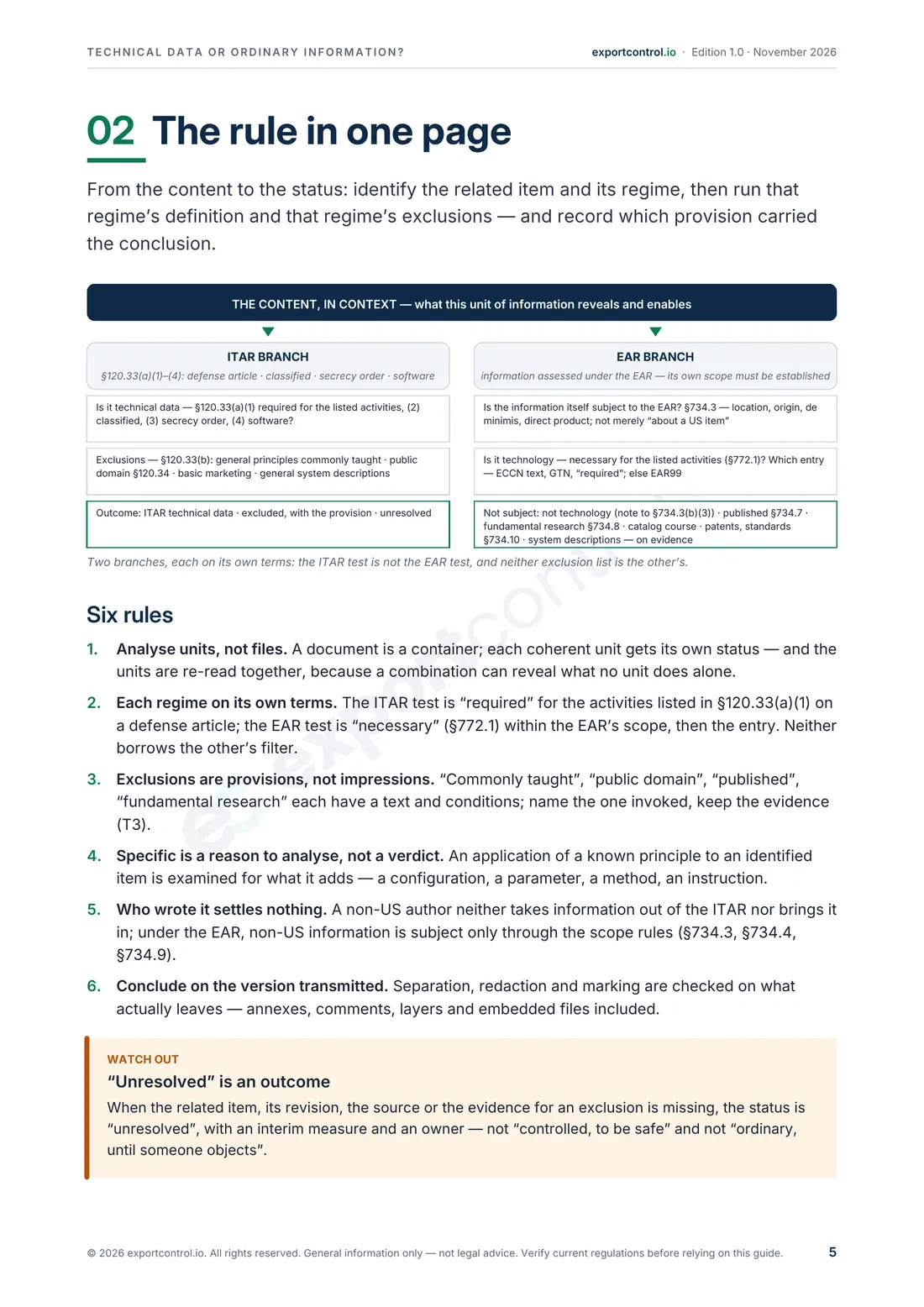
- Each regime on its own terms: ITAR “required” for the §120.33(a)(1) activities with the §120.33(b) exclusions; EAR scope (§734.3), “necessary” (§772.1), then the entry — and EAR99 is not “not subject”
- Six outcomes per unit, including “unresolved” — never a bare controlled / ordinary; oral, visual and demonstrated information count
- Exclusions are provisions with routes and evidence: finding it online does not establish them, and the evidence must cover the information actually communicated
What you get
- The guide: explanations, method, conditions and limits
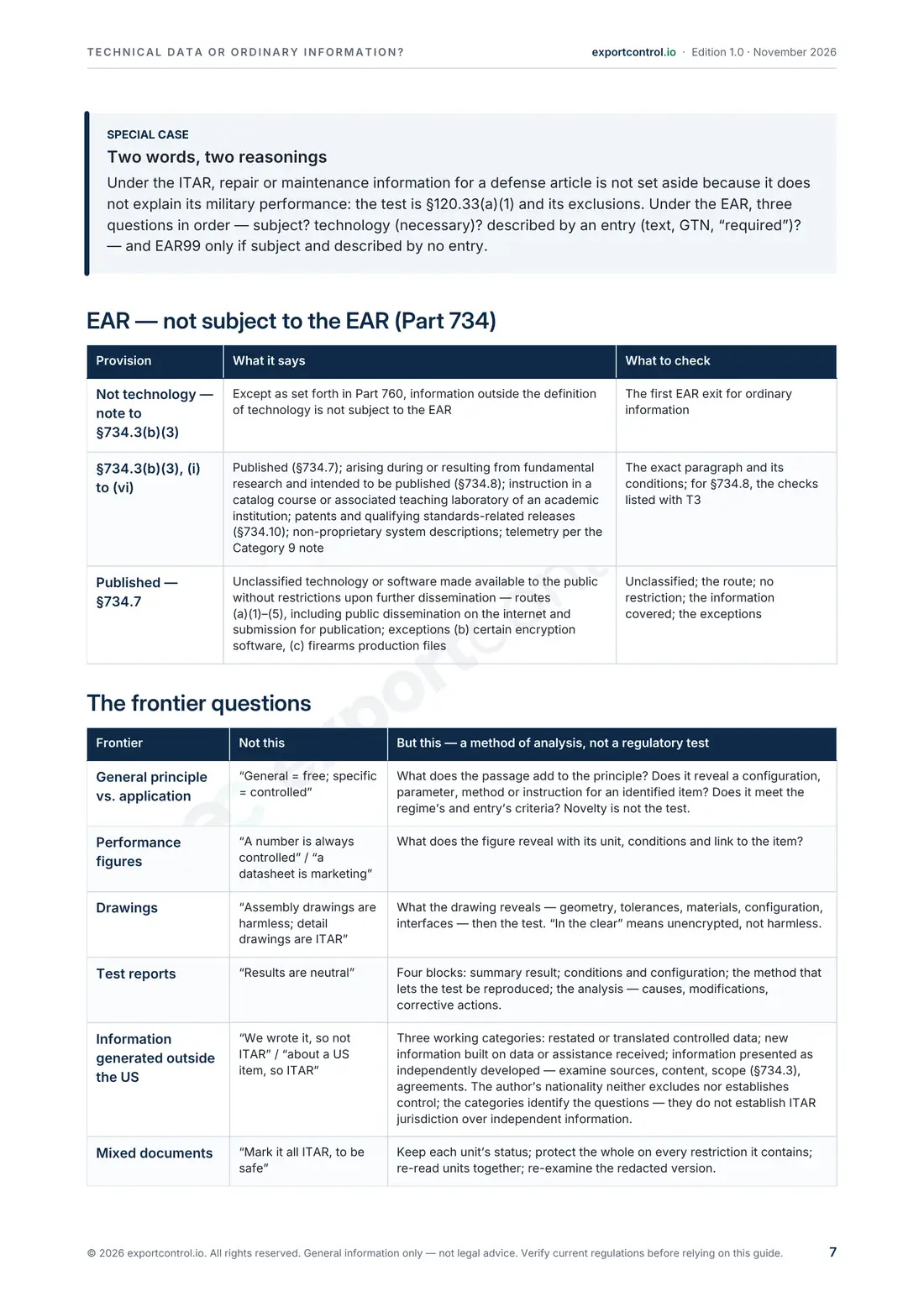
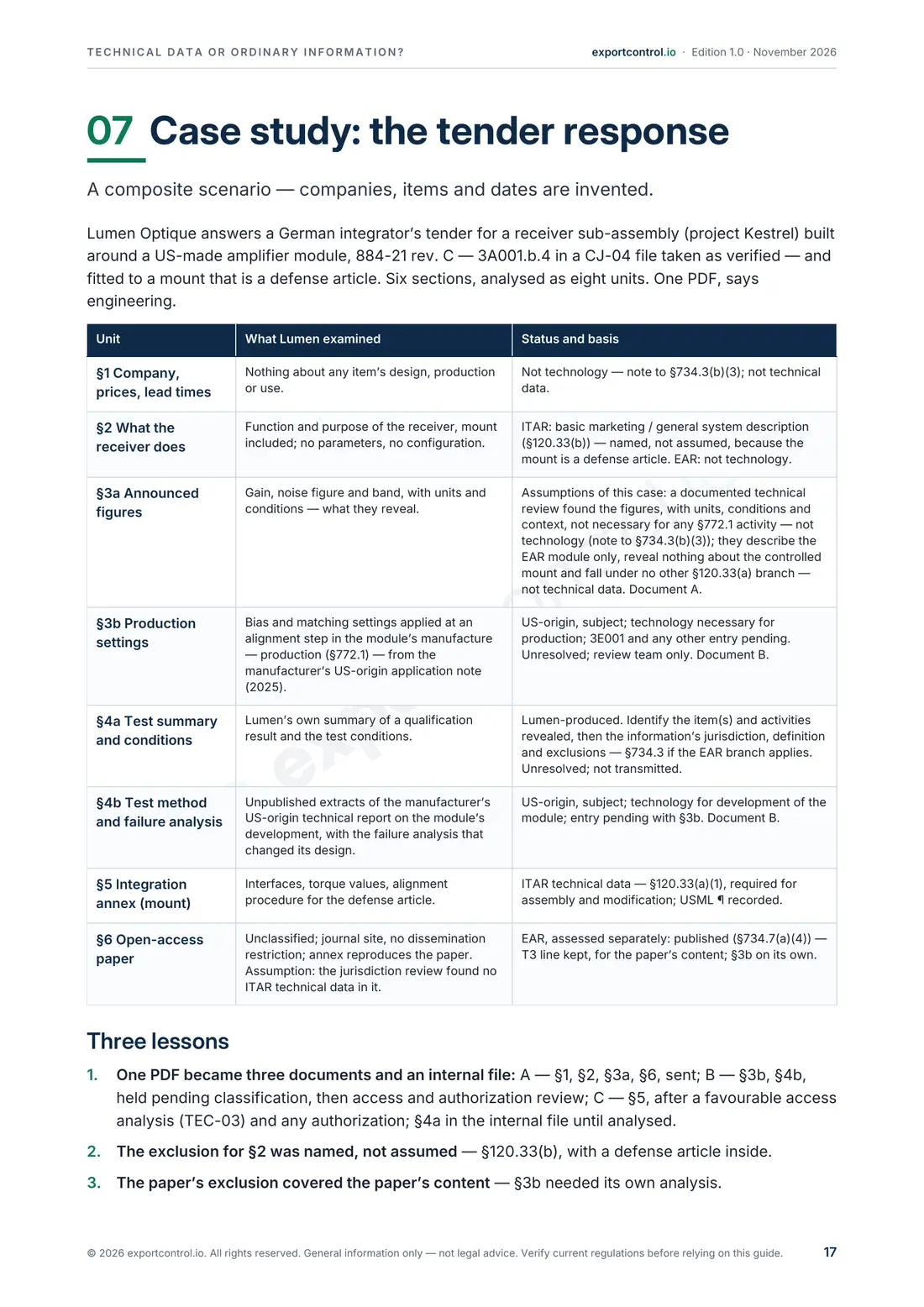
- Worked examples: six possible outcomes, the ITAR and EAR definitions side by side, the frontier questions (principle vs. application, figures, drawings, test reports, non-US authorship, mixed documents), a worked conclusion, ten pitfalls, a commented real case (Honeywell, 2021) and a composite case
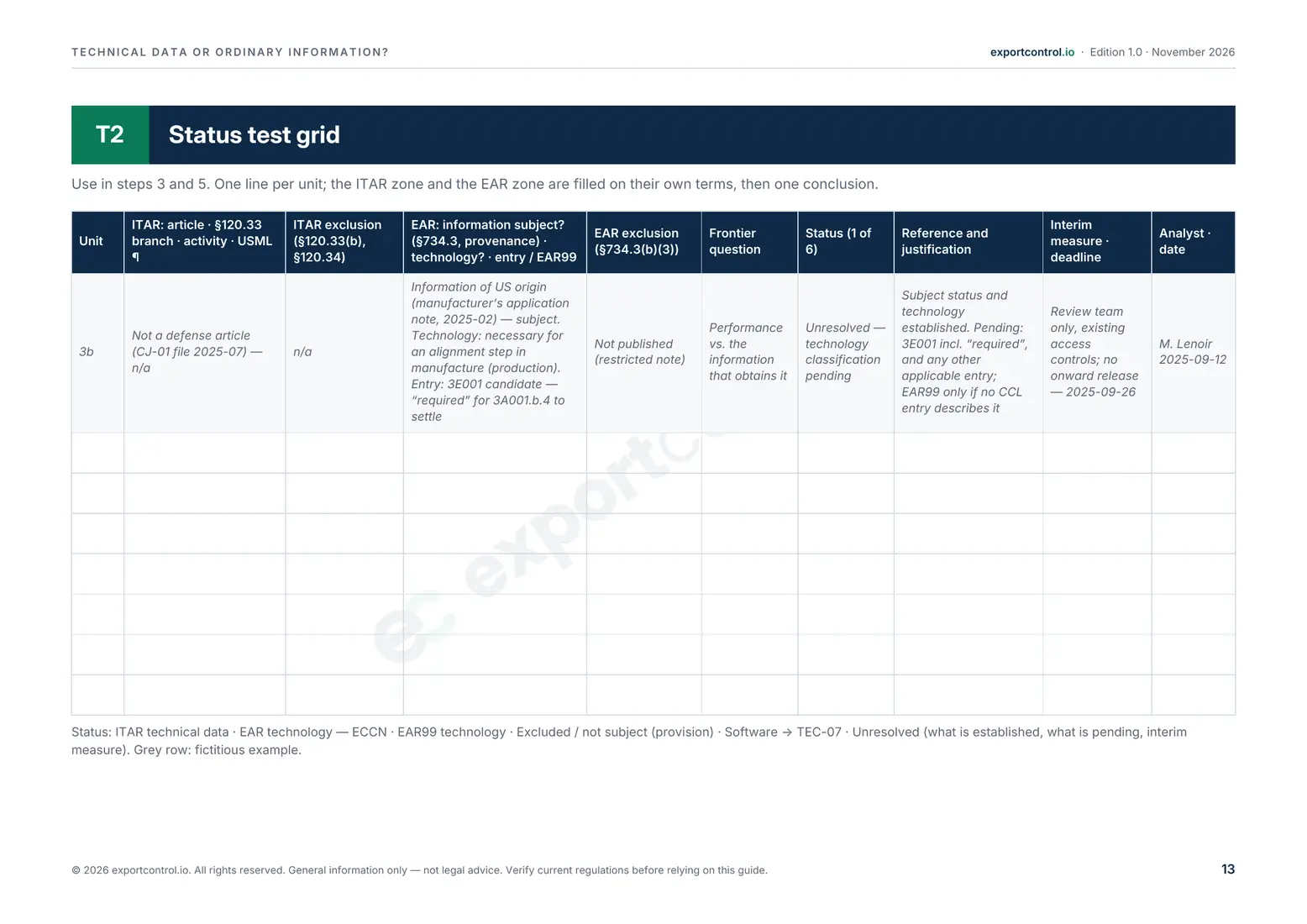
- Tools printed in the guide: four templates, including a status test grid with separate ITAR and EAR zones and an exclusion evidence record, and a readiness check
- Sources with section references and their verification date
- Revisions included for 12 months
Printed tools: T1 · Information inventory · T2 · Status test grid · T3 · Exclusion evidence record · T4 · Marking and handling decision · Readiness check
Contents
- Before you start: scope and limits
- Why the status matters
- The rule in one page
- The definitions, each on its own terms
- The method in six steps
- Templates T1 to T4
- Ten pitfalls
- Case study: the tender response
- Readiness check
What it does not cover
- Who may access the information, where and under which authorization — and the TCP
- Software and source code; encryption
- Defense services performed with the information
Assumed knowledge. Which regime and entry the related item falls under, and whether de minimis or direct product questions arise for your products.
Sample pages
Open an image for the full-size page.